
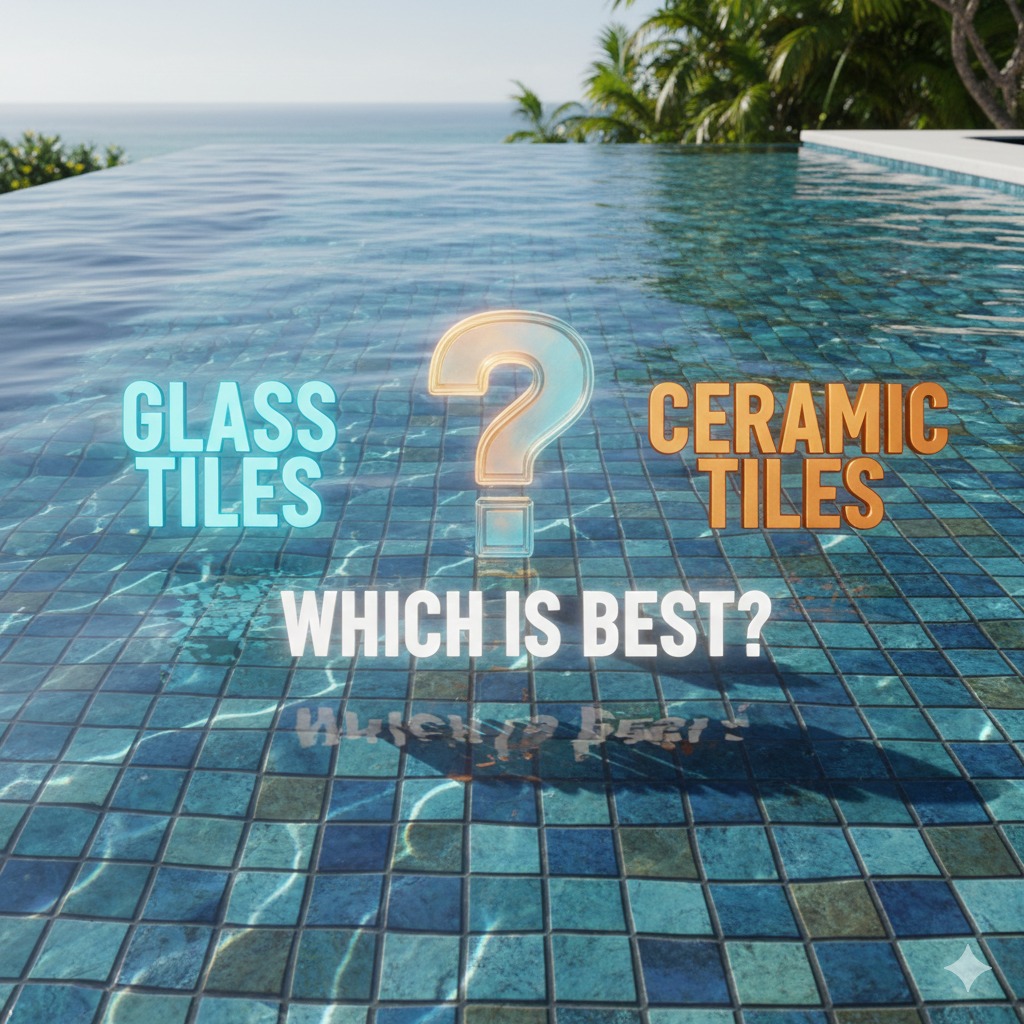
The Ultimate Pool Tile Showdown: Why This Decision Could Cost You Thousands (Or Save You)
Glass vs Ceramic Pool Mosaic Tiles Time to plan the pool you’ve been dreaming of for ages unless you’ve already done it, that’ll be yet another dream. However, there’s a consequence to mull in long-term decision-making situation like this one. Sparkling, beautiful, glass mosaic tile or a more classic, utilitarian choice: ceramic tile? Both ceramic and glass offer beautiful designs and longevity, but one has a stronger cululative long-term value over the years meaning you won’t be needing expensive replacements every few years and tile replacements will probably outlast your mortgage. The option cost is likely the cost of more tile replacements.
The swimming pool tile market is predicted to grow in the coming years its value is sky high in the market and is likely to be valued at 5.67 billion in 2033 , growing at a 7.1 % CAGR. Tile mosaicing trends are leading to a more sophisticated pool tile choice, meaning a more expensive choice. Most people still choose a more classic ceramic tile, but what you need to know is simple. Ceramic tiles have a 3-7% water retention rate. Glass mosaic tiles have a 0% water retention rate. That number is the difference between a pool you end up spending a lot of money on repairs, and one that is pristine and your only bother for several decades.
Let’s finalize this and find your pool tile match.
Understanding the Basics: What Makes Glass and Ceramic Tiles Different?
When considering pool tiles, think of choosing between two lifeguards. One is friendly and easy to work with, while the other is more reserved but extremely tough under pressure. Both defend a pool, but in different ways.
Ceramic tiles: the traditional hero.
Ceramic tiles are made of natural clay, sand, and minerals, and are fired at low temperatures. These are the tiles that have been protecting pools for decades, and are the most familiar tiles to pools.
Explanation of the manufacturing process: the raw materials are mixed, molded and then fired in a kiln at about 2000 degrees. Then a glaze is added for coloring and protection. Because of how straightforward the process is, it is easy to see why ceramic is so much cheaper than glass tiles.
Glass mosaic tiles: the modern luxury.
Glass mosaic tiles are made of molten silica sand that has been cooled and shaped into small pieces. Put in other terms, think of taking liquid light, and then freezing it. Some premium glass tiles take it a step further by heating the glass twice to remove any internal stress, armor plating the glass and making it a pool grade glass.
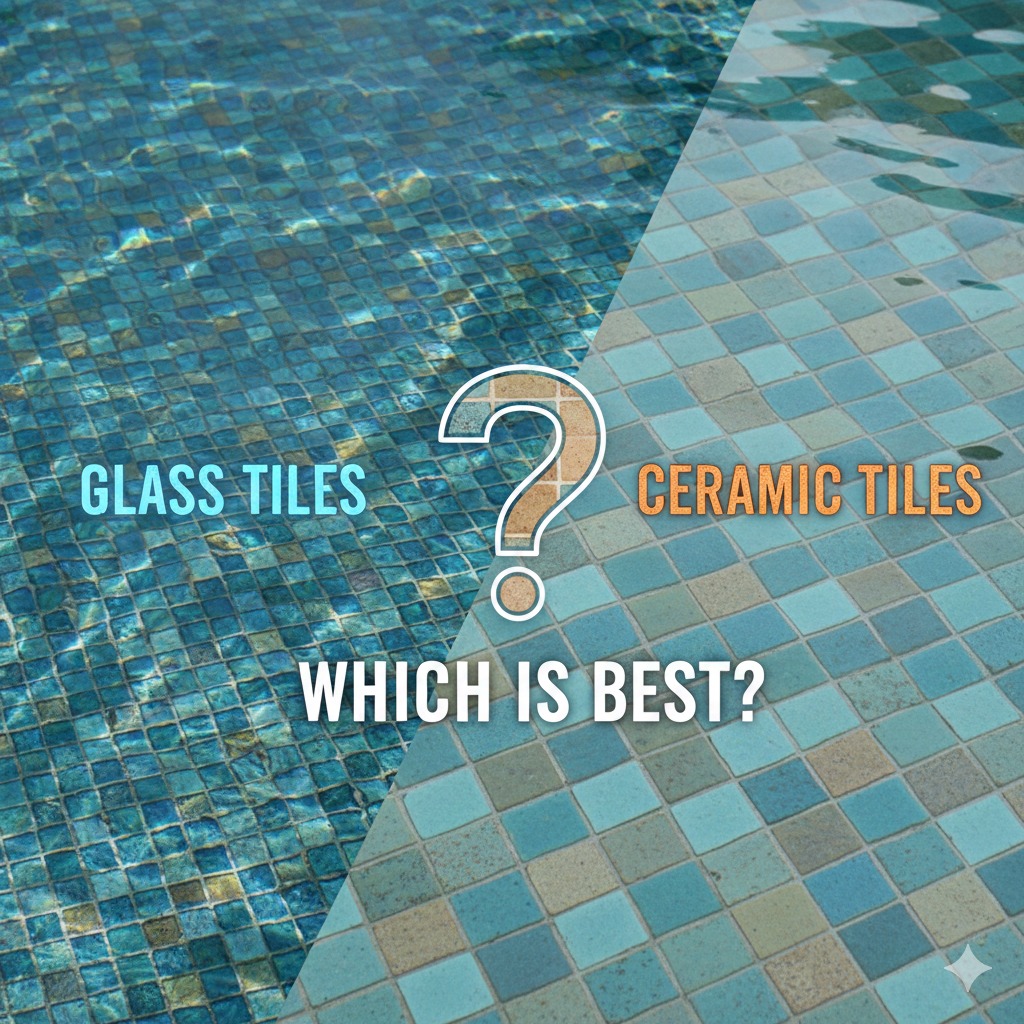
What makes glass tiles special is their translucency. Light, sunlit tiles allow light into the pool, reflect light, and bounce the light off the enclosed water, creating a magical effect.
The Problem: Why Most Pool Owners Choose Wrong (And Regret It Later)
Here’s the critical issue nobody talks about: The initial beauty of your tile doesn’t determine its longevity—the material’s impermeability does.
Common Misconceptions That Lead to Wrong Choices
Mistake #1: Assuming Ceramic is ‘Good Enough’ for Every Function
People think ceramic is the most durable tile class. ‘It has been around forever’, is the sentiment most users express. However, their reasoning is fundamentally flawed, much like saying flip phones are still worth having because they still make calls.
Mistake #2: Paying for Beauty
Glass tiles are sometimes chosen solely for their beauty. The complexity of their installation and maintenance is, too, oftentimes ignored. Beauty is what these tiles exude. Cracking, delaminating, and loss of adhesion are what these tiles do.
Mistake #3: Underestimating Water Absorption
Ceramic tiles having 3-7% moisture absorption are severe. Evaporation does not occurr, and moisture infiltration is problematic. Water freezes, causing expansion and cracking. So does the adhesive, which ultimately leads to delamination. Cloaking the tile is mold and mildew.
Mistake #4: Ignoring Installation Requirements
Specialized epoxy adhesives and installation are required for glass tiles. General contractors usually say they can do it, but lack the necessary precision, which leads to poor performance. This results tiles appearing nice, but failing 2-3 years.
Head-to-Head Comparison: The Technical Breakdown
Let’s get specific about how these materials perform across critical factors.
Water Absorption: The Make-or-Break Factor
| Factor | Glass Mosaic | Ceramic | Winner |
| Water Absorption | 0% (Impervious) | 3-7% (Porous) | Glass |
| Impact on Durability | Zero water infiltration = no freeze-thaw damage, no mold, no swelling | Water seeps in, freezes, expands, cracks substrate | Glass |
| Lifespan in Wet Conditions | 15-20+ years | 8-12 years before issues emerge | Glass |
Think of water absorption like a sponge versus a waterproof container. Ceramic is the sponge—it holds moisture. Glass is the container—water slides right off.
Durability and Impact Resistance
| Metric | Glass Mosaic | Ceramic |
| Modulus of Rupture (MOR) | High (specialized glass: 45+ MPa) | Lower (25-30 MPa) |
| Resistance to Chipping | High—won’t easily crack under normal impact | More prone to chips with heavy use |
| Lifespan | 15-20+ years | 8-12 years |
| Delamination Risk | Lower (proper epoxy installation prevents it) | Higher (ceramic’s porosity + water absorption = delamination) |
Real-world scenario: A ceramic tile cracks or chips. Water gets inside. Over months and years, that damage spreads. A glass tile? Its imperviousness means damage is purely cosmetic—it doesn’t affect the tile’s structural integrity.
Chemical Resistance: Battling Pool Chemicals
Managing Chemicals: A Pool Owner’s Dilemma
Owning a pool means constantly managing a variety of harsh chemicals. Pools use chlorine, bromine, and algaecides, and while these chemicals help kill foriegn organisms in the water, they can also damage the tile for the pool.
Glass Mosaic Tiles: Glass tiles have a non-porous and chemically inert composition, which means they are almost never negatively affected by pool chemicals. Glass tiles underwater for a decade are often not discolored.
Ceramic Tiles: Tiles can be discolored by the chemicals in the water. The upper glaze can be etched, or degraded depending on what chemicals are in the water. Saltwater tiles are also discolored more quickly than freshwater tiles.
Winner: Glass.
Fade Resistance: Color Retention
For pool owners, keeping their pool vibrant is absolutely essential. Over time, UV rays in the sunlight can damage the appearance of a pool.
Glass Mosaic Tiles: The glass tiles are highly fade resistant. They are manufactured to have UV resistant inner pigmentation in the glass body. They have great long term color retention.
Ceramic Tiles: The tiles have a colored glazed outer layer. Unfortunately, this glass surface is the layer that is most susceptible to UV light. Over time in the UV light, color change and fading is visible and noticeable.
Winner: Glass.
Safety: Slip Resistance
Ceramic tiles dominant in every other category makes a strong comeback for pool safety. On the edges of the pool, it’s essential the surface is slip resistant, especially when wet.
Winner: Ceramic
Installation Complexity and Expertise Required
| Aspect | Glass Mosaic | Ceramic |
| Adhesive Type | Epoxy (specialized, expensive) | Standard thinset mortar |
| Installation Cost | $8-$30 per sq. ft. (labor only) | $5-$15 per sq. ft. (labor only) |
| Expertise Required | High—certified pool professionals essential | Moderate—skilled installers sufficient |
| Room for Error | Low—adhesive color shows through, improper installation causes early failure | Moderate—more forgiving surface |
| Learning Curve | Steep—many contractors claim competency but lack true expertise | Gentler—DIY-friendly for experienced tilers |
The Critical Insight: Glass tile installation is where many projects fail. A contractor charging $8 per square foot for labor likely lacks the expertise of someone charging $25+. Cutting costs on installation often means replacing tiles within 5 years.Winner: Ceramic (easier installation, more margin for error)
Maintenance and Cleaning
Both are easier to maintain than porous natural stone.
Glass Mosaic Tiles: Non-porous surface resists stains, and mold and mildew. Just rinse mild detergent to keep them clean. However, there can be, albeit easy to remove, mineral deposits on glass from hard water.
Ceramic Tiles: Just as easy to clean. The glazed surface resists stains, but dirt and algae can build up in the grout lines over time and require scrubbing.
Maintenance Advantage: Tie- Both are low maintenance.
The Cost: The Reality
Let’s talk about the numbers. The budget always matters, especially when tackling a job that can run from $30,000 to $100,000 plus for just tiling.
Material Cost (2026 Pricing)
Ceramic Mosaic Tiles: $50-$140 sq. ft. (material only)
Glass Mosaic Tiles: $75-$300+ sq. ft. (material only)
For a std. 12×20 pool (240 sq. ft.), here’s the difference:
Ceramic: $12,000-$33,600 tile material
Glass: $18,000-$72,000 tile material
Labor Cost
Ceramic Mosaic Tiles: $5-$15 sq. ft. (labor)
For 240 sq. ft. pool: $1,200-$3,600 labor
Glass Mosaic Tiles: $8-$30+ sq. ft. (labor)
For 240 sq. ft. pool: $1,920-$7,200 labor
Total Project Cost (240 sq. ft. pool)
| Scenario | Material | Labor | Total |
| Budget Ceramic | $12,000 | $1,200 | $13,200 |
| Premium Ceramic | $33,600 | $3,600 | $37,200 |
| Basic Glass | $18,000 | $1,920 | $19,920 |
| Premium Glass | $72,000 | $7,200 | $79,200 |
The Long-Term Math: If ceramic tiles last 10 years and glass tiles last 20 years, you’re essentially buying two ceramic tile jobs for the price of one glass job. From a pure cost-per-year perspective, glass becomes more economical over time.
Climate Considerations: Geography Matters
Your location dramatically affects which tile is better for you.
Cold Climates (Northern Regions)
Problem: Freeze-thaw cycles are brutal. Water inside tiles expands when it freezes, cracking the tile and its substrate.
Glass: Wins decisively. Zero water absorption means no freeze-thaw damage. Premium glass tiles like Lava Glass undergo 150+ freeze-thaw test cycles, surpassing industry standards.
Ceramic: Struggles. Ceramic’s 3-7% water absorption becomes dangerous. Water inside the tiles freezes, expands, and cracks the tile or even the pool structure.
Recommendation: Glass is essential in freeze-thaw zones.
Hot, Sunny Climates (Southern Regions)
Problem: Intense UV rays and thermal stress (expansion/contraction) degrade tiles.
Glass: Excels. UV-resistant pigments and stable thermal properties mean colors stay vivid and no warping occurs.
Ceramic: Acceptable but fades faster. UV exposure degrades the glaze over 5-7 years.
Recommendation: Glass wins for longevity; ceramic is acceptable if budget is tight.
Coastal regions
Humidity along with saltwater pools speed up the degradation of materials and components
Glass: Superior. Salt and humidity have no impact on glass.
Ceramic: Vulnerable. Saltwater pools speed up degradation of the glaze. Algae and mold grow in the moist grout lines.
Recommendation photos glass mosaic tile in pools:’
Aesthetic comparison: Beauty factors
Aesthetics impact the decision of what materials to put in the pool. Visual impact.
Wet glass mosaic tiles: Jewel like glimmer and shun and reflect the sunlight
Clear light and more vibrant water
More expensive tile with unlimited color options and custom patterns
Perfect for modern luxury design
Adds dramatic visual depth
Ceramic mosaic tile: Natural understated and more traditional less glimmer
Earthy and classic
Available in crackled glazes and textured finishes
Rustic style and blends with natural stone landscaping
Flexibility both tiles allow for design. TimesCeramic is classic and shine. Glass is popular in custom artistic mosaic combinations and color.
Emerging Design Trends (2026)
The market is seeing increased demand for:
- Geometric grid patterns in glass tiles (modern, spa-like)
- Nature-inspired designs blending ceramic with stone aesthetics
- Custom artistic creations using glass mosaics (family crests, tropical scenes)
- Mixed-material designs combining glass accents with ceramic bases
- Sustainable and eco-friendly options (recycled glass)
Which Is Better? The Verdict Based on Your Situation
There’s no universal answer—it depends on your priorities.
Choose Ceramic If:
✓ Budget is your primary concern
✓ You prioritize slip resistance and safety
✓ You want a traditional, timeless aesthetic
✓ Your pool is in moderate climates with minimal temperature swings
✓ Your pool is a decorative garden element with light use
✓ You’re comfortable replacing tiles in 10-12 years
Choose Glass If:
✓ Durability and longevity matter most
✓ You live in freeze-thaw or extreme climates
✓ You want maximum visual impact and luxury aesthetics
✓ Your pool sees heavy use and needs superior chemical resistance
✓ You’re willing to invest more now to avoid expensive replacements later
✓ You want UV-stable, fade-proof colors for outdoor pools
Advanced Tips: Installation Secrets That Prevent Costly Failures
1. Verify Your Installer’s Glass Tile Experience
Ask potential contractors:
- “How many glass mosaic pool projects have you completed?”
- “Are you certified for epoxy adhesive installation?”
- “Can you provide references from glass tile projects 5+ years old?”
A competent glass tile installer can show you examples of work that’s held up over years.
2. Demand Proper Surface Preparation
Improper substrate preparation is the #1 cause of early tile failure. Demand:
- Proper waterproofing membrane installation
- Clean, dust-free substrate
- Correct mortar bed thickness
- High-quality epoxy for glass (never standard mortar)
3. Prioritize Proper Slope for Drainage
Poor drainage leads to water pooling, which accelerates degradation. Demand:
- Slight slope away from pool deck
- Grout lines that facilitate drainage
- Textured surfaces or proper pitch to prevent water accumulation
4. Choose the Right Mortar (Critical for Glass)
- Standard thinset mortar: For ceramic ONLY
- ANSI A118.15 epoxy mortar: For glass (specialized, more expensive, essential)
Using wrong adhesive for glass is the fastest way to ensure failure.
5. Grout Sealing: Often Overlooked, Always Important
Grout is porous and absorbs water. For both glass and ceramic:
- Use epoxy grout (more expensive but worth it)
- Seal grout lines annually in heavy-use pools
- Inspect annually for cracking or erosion
Real-World Case Studies: What Actually Happens
Case Study #1: The Budget-Conscious Ceramic Pool (Failed)
A Florida homeowner chose ceramic tiles to save money: $15,000 vs. $45,000 for glass. After 8 years:
- Tiles began chipping and cracking
- Water infiltration led to mold growth
- Adhesive bonds failed due to freeze-thaw cycles (infrequent but devastating)
- Complete retiling needed: $18,000
Total cost: $33,000 (original + replacement)
Lesson: Saving $30,000 upfront cost $33,000 long-term
Case Study #2: The Premium Glass Investment (Success)
A California pool owner invested $65,000 in Lava Glass tiles with expert installation. After 15 years:
- Zero delamination or cracking
- Colors remain vibrant
- Only maintenance: annual grout inspection and mild cleaning
- Still looking beautiful, estimated 5+ more years of life
Total cost: $65,000 (no replacements)
Lesson: Upfront investment pays off dramatically over time
5 Original FAQs About Glass vs. Ceramic Pool Tiles
1. Can I Mix Glass and Ceramic Tiles in the Same Pool?
Answer: Technically yes, but it’s not ideal. Glass and ceramic have different water absorption rates, thermal expansion coefficients, and installation requirements. If you mix them, use ceramic for less-visible areas (floor, corners) and glass for high-visibility zones (waterline, main wall). Most professionals recommend consistent material throughout for aesthetic coherence and performance consistency. If you want mixed materials, work with a designer who specializes in pool aesthetics.
2. Will Glass Tiles Make My Pool Look Green or Cloudy Over Time?
Answer: No. Properly installed glass tiles remain crystal clear indefinitely. What you might see is mineral buildup from hard water (white deposits) on the tile surface—but this is easily cleaned with vinegar and water. Glass doesn’t discolor or cloud unless severely damaged. If your glass pool tiles appear cloudy or green, it’s typically a water chemistry issue (algae growth or high mineral content), not the tiles themselves. Address the pool water quality, not the tiles.
3. Is Glass Tile Worth It If I’m Selling My Pool Home Soon?
Answer: Absolutely. Glass tile installations significantly boost perceived value and can command premium prices ($5,000-$15,000 more) in luxury markets. A stunning glass-tiled pool becomes a centerpiece that buyers remember. Even if you’re not keeping the pool long-term, the initial investment typically pays dividends in home resale value. Ceramic tiles don’t offer the same prestige or resale premium.
4. What’s the Difference Between “Pool-Grade” Glass and Regular Decorative Glass Tiles?
Answer: Huge. Pool-grade glass undergoes specialized treatment:
- Double annealing to eliminate internal stress
- Freeze-thaw testing (150+ cycles per ANSI standards)
- Chemical resistance testing against pool chemicals
- Impact resistance certification for safety
Decorative glass tiles are not tested for pool applications and will fail catastrophically. Always specify ANSI A137.2-certified glass pool tiles, never decorative glass. This certification isn’t optional—it’s essential for durability and safety.
5. How Often Do Pool Tiles Actually Need Replacement, Really?
Answer:
- Ceramic: Every 8-12 years if high-use pool; 10-15 years if light-use pool
- Glass: 15-20+ years even in heavy-use pools
- Maintenance: Both require annual grout inspection and occasional cleaning
The need for replacement depends on water chemistry maintenance, climate exposure, and installation quality far more than material type alone. A well-maintained ceramic pool might last 15 years, while a poorly installed glass pool might fail in 7 years. Installation quality is critical.
The Final Decision: Your Clear Path Forward
Here’s your action plan:
Step 1: Assess Your Climate
Cold climate with freeze-thaw cycles? Glass is non-negotiable. Moderate climate? Both work, but glass lasts longer.
Step 2: Define Your Budget
Willing to invest $50,000+? Glass offers superior long-term value. Limited to $15,000-$25,000? Quality ceramic is realistic and functional.
Step 3: Prioritize Your Values
Aesthetics and luxury? Glass. Safety and ease of maintenance? Ceramic. Longevity and durability? Glass.
Step 4: Hire Expertise, Not Bargains
Whether ceramic or glass, hire certified professionals. A $20/sq. ft. labor job beats a $8/sq. ft. labor job every time. The cheapest installation often becomes the most expensive replacement.
Step 5: Invest in Proper Installation
Waterproofing, substrate preparation, correct adhesives, and proper slope matter infinitely more than material choice. A ceramic pool with expert installation outlasts a glass pool with amateur installation.
The Bottom Line: Glass mosaic tiles offer superior durability, aesthetics, and long-term value—but only if properly installed by experts and maintained consistently. Ceramic tiles provide a budget-friendly alternative with adequate performance in moderate climates. Neither material is “better” universally; the right choice depends on your climate, budget, priorities, and commitment to professional installation.
Your pool is an investment in your lifestyle. Choose wisely, hire experts, and you’ll be enjoying crystal-clear water and beautiful tiles for decades to come.