
Let’s be honest: we all have “Champagne tastes on a beer budget” when it comes to home renovations.
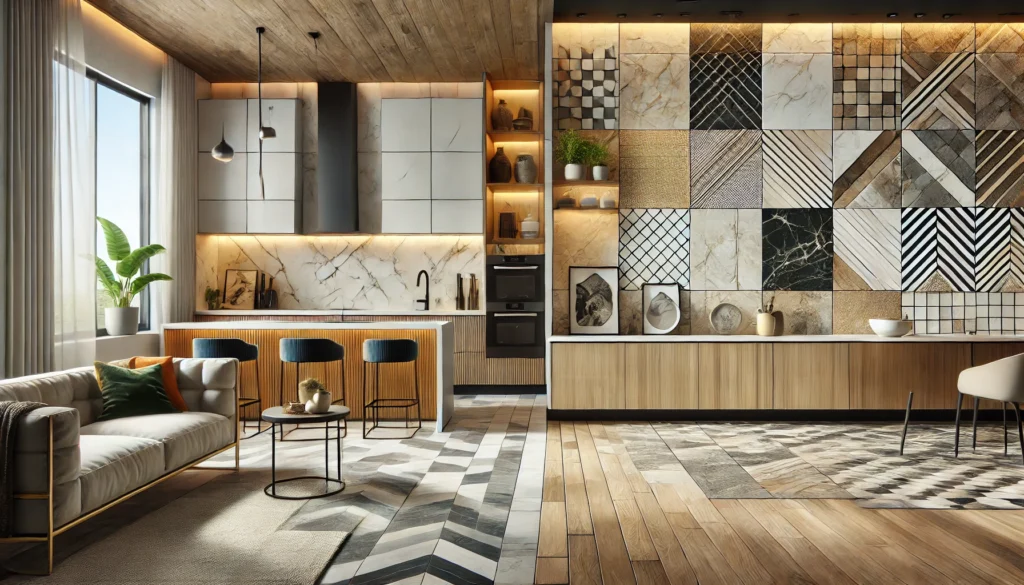
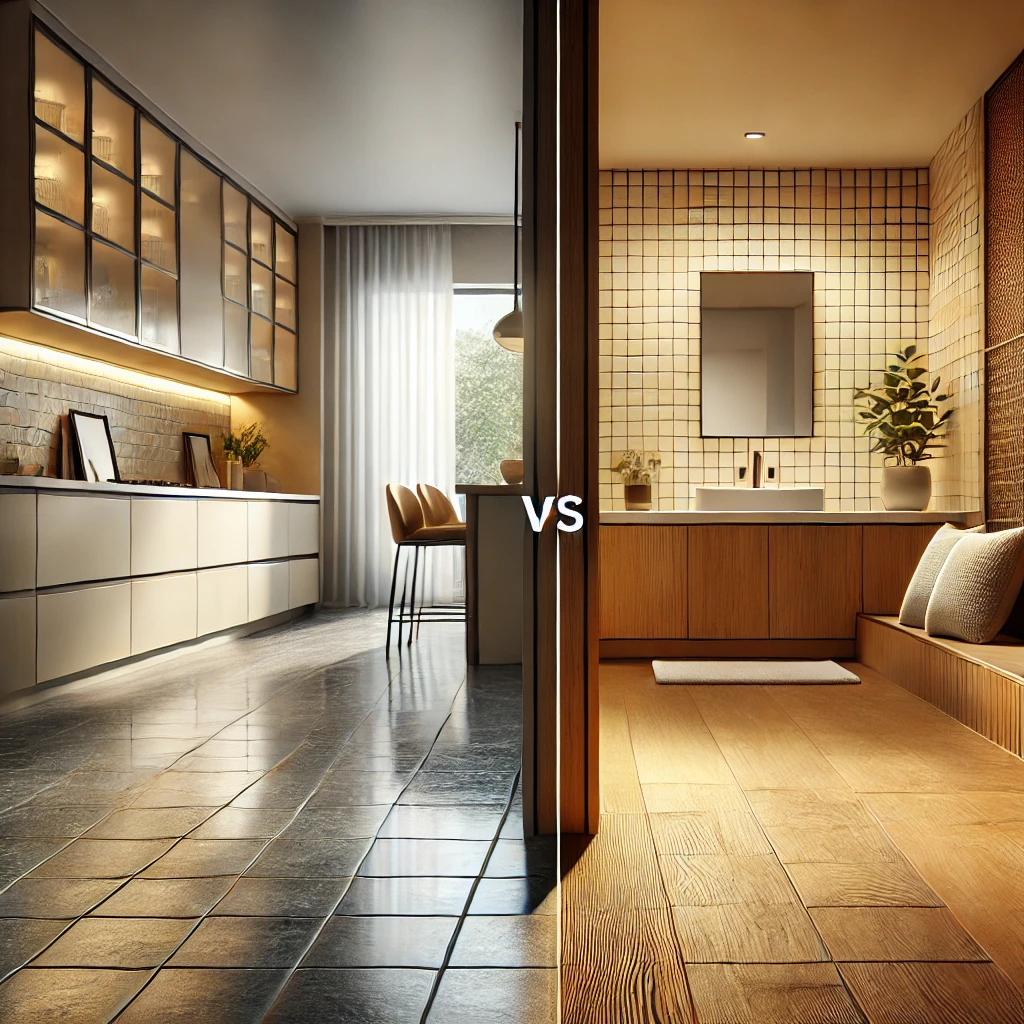
You scroll through Pinterest or Instagram, double-tapping images of sprawling Italian marble floors, sleek large-format porcelain bathrooms, and herringbone wood-effect hallways. Then, you visit a high-end boutique tile showroom, flip over the price tag, and feel your stomach drop. Suddenly, that “dream bathroom” feels like a financial nightmare.
This is the “Renovation Tax” – the premium you usually pay for style.
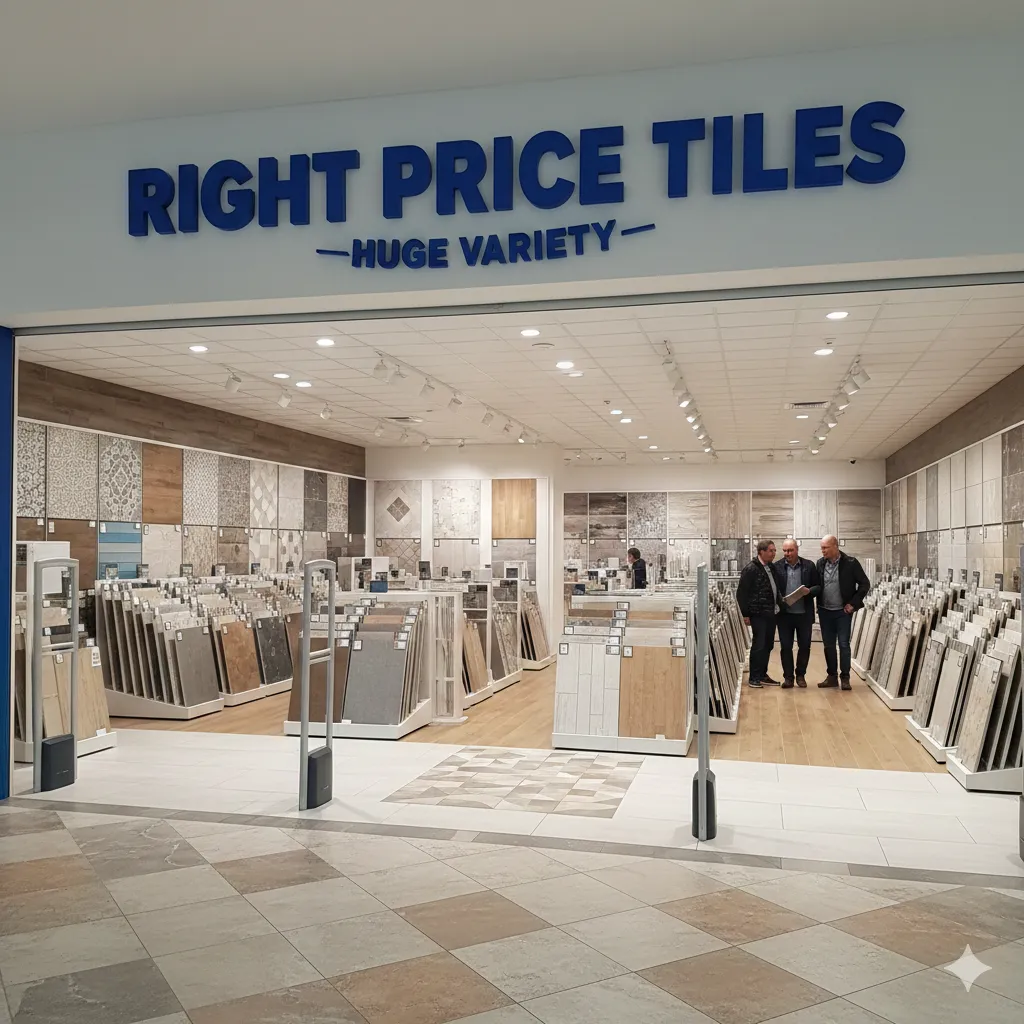
But recently, a shift has happened. Homeowners across Ireland and the UK are realizing that the price on the tag doesn’t always correlate with the quality in the box. Leading this charge is Right Price Tiles, a retailer that has somehow managed to crack the code on selling genuine luxury products at prices that make you do a double-take.
Is it magic? Is it a scam? Or is it just smart business?
In this deep dive, we’re peeling back the curtain on the tile industry. We’ll explore exactly how Right Price Tiles sells luxury stock for rock-bottom prices, debunk the myths about “cheap” tiles, and give you the insider roadmap to getting a magazine-cover home for a fraction of the cost.
The “Middleman” Myth: How Traditional Retailers Inflate Prices
To understand why Right Price Tiles is cheap, you first have to understand why everyone else is so expensive.
In the traditional tile industry, a tile travels a long, expensive road before it reaches your bathroom wall:
- Manufacturer (Italy/Spain): Makes the tile for €10/sqm.
- Export Agent: Adds a fee to get it out of the country.
- Import Wholesaler: Adds a markup to bring it into the UK/Ireland.
- Regional Distributor: Adds a markup to truck it to local shops.
- Boutique Retailer: Adds a huge markup to cover their fancy showroom rent, latte machine, and marketing.
- You: You pay €60/sqm.
Right Price Tiles disrupts this chain.
The “Factory-Direct” Strategy
Instead of shaking hands with five different middlemen, Right Price Tiles goes straight to the source. Their buyers fly directly to the factories in Castellón (Spain) or Sassuolo (Italy) – the global capitals of ceramic production.
By negotiating directly with the manufacturers and cutting out the agents, wholesalers, and distributors, they strip out layers of “dead cost.” That €10 tile might end up on their shelf for €25 instead of €60. You aren’t paying for less quality; you’re paying for fewer handshakes.
The Power of Volume: Buying Big to Save Big
Imagine you go to a market to buy an apple. You pay €1.
Now imagine you buy the entire tree. You might pay €0.10 per apple.
This is the principle of Economies of Scale, and it is the engine of the Right Price Tiles business model. With over 25 stores nationwide, they aren’t buying a few pallets of tiles; they are buying shipping containers.
The “Full Production Run” Advantage
Factories love consistency. When a machine starts making a specific grey polished porcelain tile, it costs money to stop it and switch to a beige one.
- Small Boutique: Orders 500 sqm. The factory charges a premium because it’s a small, annoying order.
- Right Price Tiles: Orders 20,000 sqm (a full production run). The factory gives a massive discount because the machines can run uninterrupted for days.
These savings are passed directly to you. It’s not that the tile is “cheaper” to make – it’s just bought more efficiently.
Warehouse vs. Boutique: Where Your Money Actually Goes
Walk into a high-end tile boutique.
- The lighting is perfectly dim.
- The staff are wearing suits.
- There is free espresso.
- The showroom is on a high street with massive rent.
You are paying for all of that. Every sip of that free coffee is hidden in the cost of your subway tiles.
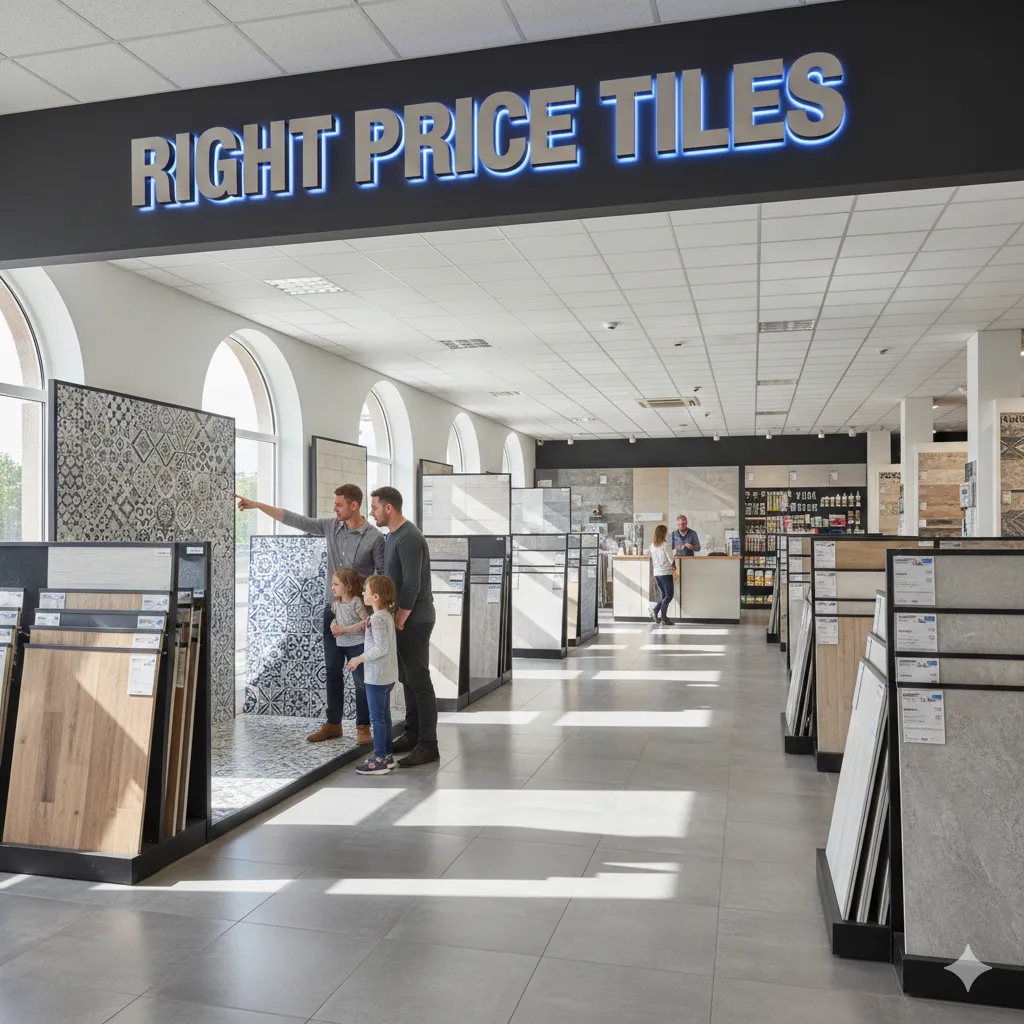
Right Price Tiles takes a different approach. Their locations are typically in retail parks or warehouse units. These locations have significantly lower rent per square foot than high-street shops.
- No frills: The tiles are often stacked on pallets, not just displayed in single sample boards.
- Take it home today: Because they operate as warehouses, the stock is usually right there. You don’t wait 6 weeks for delivery; you load your car and go.
This “Cash and Carry” model drastically reduces their overheads. They don’t need to pay for a separate storage facility because the shop is the storage facility. Lower overheads = lower prices for you.
The “End-of-Line” Goldmine
This is an insider secret that most people don’t know. Fashion changes fast in the tile world. Last year’s “Calacatta Gold” might be replaced by this year’s “Statuario White.” They look 99% identical to the untrained eye.
When a factory decides to update a range, they often have thousands of meters of the “old” design left. It is still Grade A, perfect quality luxury tile. It’s just “last season.”
- Luxury Brands: Cannot sell “last season” stock because it hurts their image.
- Right Price Tiles: Swoops in, buys the entire remaining stock for pennies on the dollar, and sells it to you as a “Special Offer” or “Job Lot.”
Pro Tip: Always ask the staff if there are any “End of Line” or “Job Lot” deals. You can often tile a utility room or downstairs loo with premium Italian porcelain for the price of basic ceramic.
Decoding the Catalog: What “Luxury” Actually Means Here
Skeptics often ask, “Okay, but are the tiles actually nice?”
Yes. Here is what you will typically find in their aisles, and why it matches the high-end specs.
1. Large Format Rectified Porcelain
- The Look: Huge 60x120cm slabs that make a room look massive and seamless.
- The Tech: “Rectified” means the edges are laser-cut to be perfectly straight, allowing for tiny, almost invisible grout lines.
- The Price Diff: Boutiques sell this for €70-€90/sqm. Right Price Tiles often lists it for €30-€45/sqm. It’s the same material (fired clay), just sourced smarter.
2. Wood-Effect Tiles (Faux Wood)
- The Look: The warmth of oak or walnut, but waterproof and scratch-proof.
- The Reality: High-end wood tiles use “inkjet technology” to print realistic grain. Right Price Tiles stocks brands that use this exact same technology. Unless you are a timber expert, you cannot tell the difference once it’s laid.
3. Polished Nano-Sealed Finishes
- The Look: High-gloss, mirror-like floors often seen in hotel lobbies.
- The Feature: They come pre-sealed (Nano-sealed) to prevent staining. This is a premium feature that used to cost extra, but is now standard in many of their bulk-buy ranges.
Quality Control: Are Cheap Tiles Actually “Nasties”?
There is a fear that cheap tiles will crack, bow, or be different sizes.
Let’s address the “Grading System.”
Tiles are graded internationally:
- 1st Choice (Premium): Flawless.
- 2nd Choice (Commercial): Minor blemishes, maybe 1 in 100 tiles has a dot.
- 3rd Choice (Economy): Visible defects.
Right Price Tiles predominantly sells 1st Choice commercial goods. They are legally required to state if a tile is 2nd choice.
- How to check: Look at the box. It will say “1st” or “I”.
- The “Batch” Factor: The only risk with budget tiles is buying from different “batches” (production runs). Always buy 10-15% more than you need immediately. If you go back 3 months later, the next batch might be a slightly different shade of grey. This applies to all tile shops, not just budget ones, but because RPT turnover is high, batches change faster.
The “Hidden Costs” of Tiling (And How RPT Helps You Dodge Them)
The tile price is only half the battle. The adhesive, grout, and trims can add 30% to your bill.
Traditional shops use these “ancillaries” as a profit center. They sell you the tile cheap, then charge you €40 for a bag of adhesive that costs €15 elsewhere.
The RPT Strategy:
They tend to private-label or bulk-buy adhesives and grouts (often from major manufacturers like Bostik or Larsen) and sell them at trade prices to the public.
- Checklist: When budgeting, don’t just look at the €/sqm. Look at the total project cost. Right Price Tiles often wins on the “basket total” because they don’t price-gouge on the glue.
Design on a Dime: Styling Tips from the Experts
You don’t need a limitless budget to have a designer home. You just need to be smart.
1. The “Feature Wall” Hack
Don’t tile the whole bathroom in the expensive patterned tile.
- Buy: 3 sqm of a stunning, expensive decor tile for behind the shower or vanity.
- Buy: 20 sqm of a plain, low-cost white or grey tile from Right Price Tiles (e.g., €15/sqm) for the rest of the room.
- Result: Your eye is drawn to the expensive tile. The cheap tile fades into the background. You get the “look” for 1/3 of the price.
2. Go Big on the Floor
Using large tiles (60x60cm or larger) in a small room actually makes it look bigger because there are fewer grout lines to break up the eye. RPT specializes in these larger formats at entry-level prices.
3. Zoning
Use wood-effect tiles to create “zones” in an open plan kitchen/living area. It removes the need for expensive thresholds or different floor levels.
Installation Intelligence: Don’t Ruin Good Tiles with Bad Labor
You can buy the most expensive marble in the world, and a bad tiler will make it look cheap. Conversely, a great tiler can make a €15 tile look like a million bucks.
- Ask for Recommendations: Right Price Tiles staff see tilers every day. Ask them, “Who buys the most adhesive here?” (The tilers buying the most glue are the ones doing the most work – i.e., the busy, good ones).
- Get the Right Grout: Don’t just use white. Use a grey or charcoal grout for floor tiles. It hides dirt and defines the tile edges, making the installation look sharper and more “architectural.”
Advanced Tips: Navigating the Industry Like a Pro
For those who really want to geek out on getting the best deal, you need to look beyond just the store shelf.
Utilize Online Resources
Before you commit to a purchase, educate yourself on materials. A knowledgeable customer is a salesperson’s worst nightmare (or best friend, if you know what you want).
Sites like Tiles Blog are invaluable here. They offer deep dives into:
- Porcelain vs. Ceramic: Which one do you actually need? (Hint: You don’t need porcelain for a wall).
- Trends: Is Terrazzo still cool in 2025?
- Installation Guides: So you can spot if your tiler is cutting corners.
Using resources like tilesblog.com ensures you understand the specs of what you are looking at in the Right Price Tiles showroom, confirming that you really are getting a bargain.
The “Waste” Calculation
Standard advice is to buy 10% extra for cuts and waste.
- Complex Room (lots of corners/pipes): Buy 15%.
- Large Format Tiles: Buy 15-20% (if a big tile cracks, you lose a lot of square footage).
- Right Price Tiles Return Policy: Check this carefully. Many “discount” retailers have stricter return policies on unopened boxes than boutiques. Knowing this upfront saves tears later.
Case Studies: Real World Transformations
The “Rental Flip”
- Challenge: A landlord needed to renovate a rental bathroom in Dublin. Durable, modern, but cheap.
- Boutique Quote: €2,200 for tiles.
- RPT Solution: Used a “Job Lot” of grey ceramic 30x60cm wall tiles (€12/sqm) and a premium wood-effect floor tile (€24/sqm).
- RPT Cost: €650.
- Result: The bathroom looked brand new, modern, and clean. The landlord saved €1,550 – enough to pay for the installation labor.
The “First Home” Kitchen
- Challenge: A young couple wanted a “Pinterest” marble floor for their kitchen diner (40 sqm).
- Boutique Quote: Italian Polished Marble @ €85/sqm = €3,400.
- RPT Solution: Polished Porcelain “Carrara” Lookalike (60x60cm) @ €29/sqm = €1,160.
- Result: A saving of over €2,000. The porcelain is actually easier to maintain than real marble (no sealing required, stain resistant).
Conclusion: Your Dream Home is Closer Than You Think
The narrative that “you get what you pay for” is often true, but in the world of home interiors, it is frequently used to justify inflated margins on identical products.
Right Price Tiles has proven that with a smart supply chain, high volume, and low overheads, you can supply genuine quality products to the market at prices that feel like a mistake. They have democratized luxury, making the “Grand Designs” look accessible to the “DIY SOS” budget.
So, before you sign away your savings on a boutique floor, take a trip to the warehouse. Wear a warm coat (it might be chilly in there), bring your measurements, and prepare to be shocked. The only thing you’ll be compromising on is the free espresso.
Ready to Start Your Renovation?
- Measure twice: Get your square meterage right.
- Visit a showroom: Touch the tiles. Photos don’t do justice to texture.
- Check the batch: Ensure you get enough tiles from the same production run.
- Haggle: Even in discount stores, if you are buying for a whole house, ask “Is this the best price for a bulk order?”
Frequently Asked Questions (FAQs)
1. Is there a difference between “First Grade” and “Commercial Grade” tiles at Right Price Tiles?
Yes. “First Grade” is perfect. “Commercial” or “Economy” runs may have minor imperfections or size variations. Right Price Tiles sells mostly First Grade, but always check the box or ask staff. If it’s for a utility room or garage, Commercial Grade can save you a fortune.
2. Why are the tiles so much cheaper than in independent showrooms?
It comes down to Buying Power and Overheads. They buy thousands of pallets at a time directly from factories (bulk discount) and operate out of warehouse units with lower rent, rather than fancy high-street shops.
3. Can I return unused tiles if I buy too many?
Policies vary by store, but generally, yes – provided they are full, unopened boxes and you return them within a specific timeframe (usually 21-30 days) with a receipt. However, because stock moves fast, they might not accept returns if that specific “batch” is sold out, so always check the T&Cs at the counter.
4. Do they sell real natural stone (Marble, Travertine) or just porcelain/ceramic?
They focus heavily on Porcelain and Ceramic because these require no maintenance and are cheaper to produce. However, modern “Rectified Polished Porcelain” is designed to look exactly like marble or stone without the need for sealing or specialist cleaning products.5. I found a tile I love, but it’s out of stock. How long does it take to order?
Because they import directly from Europe, lead times for out-of-stock items can be longer than local distributors (sometimes 2-4 weeks). However, their core business model is “take it away today,” so they usually have massive stock levels of their best-sellers on the floor.