
Introduction: Why Choosing the Right Tile Company Matters
Have you ever walked into a home and immediately noticed the floors? That’s the power of the right tiles. Whether you’re building your dream house, renovating a commercial space, or simply refreshing a room, the tiles you choose become the foundation – literally – of your interior design. But here’s the real challenge: with so many top 10 tiles companies in India flooding the market, how do you know which brand delivers quality, durability, and value for money?
The Indian tiles industry has exploded over the past decade. India is now the second-largest consumer of ceramic tiles globally, with the market experiencing sustained growth at a CAGR of 3.26% through 2034. In 2025 alone, the Indian ceramic tiles market reached 1,255.97 Million Square Meters, and it’s projected to grow to 1,676.95 Million Square Meters by 2034. This isn’t just about numbers – it’s about options. And with greater options comes greater responsibility to make the right choice.futurestiles+1
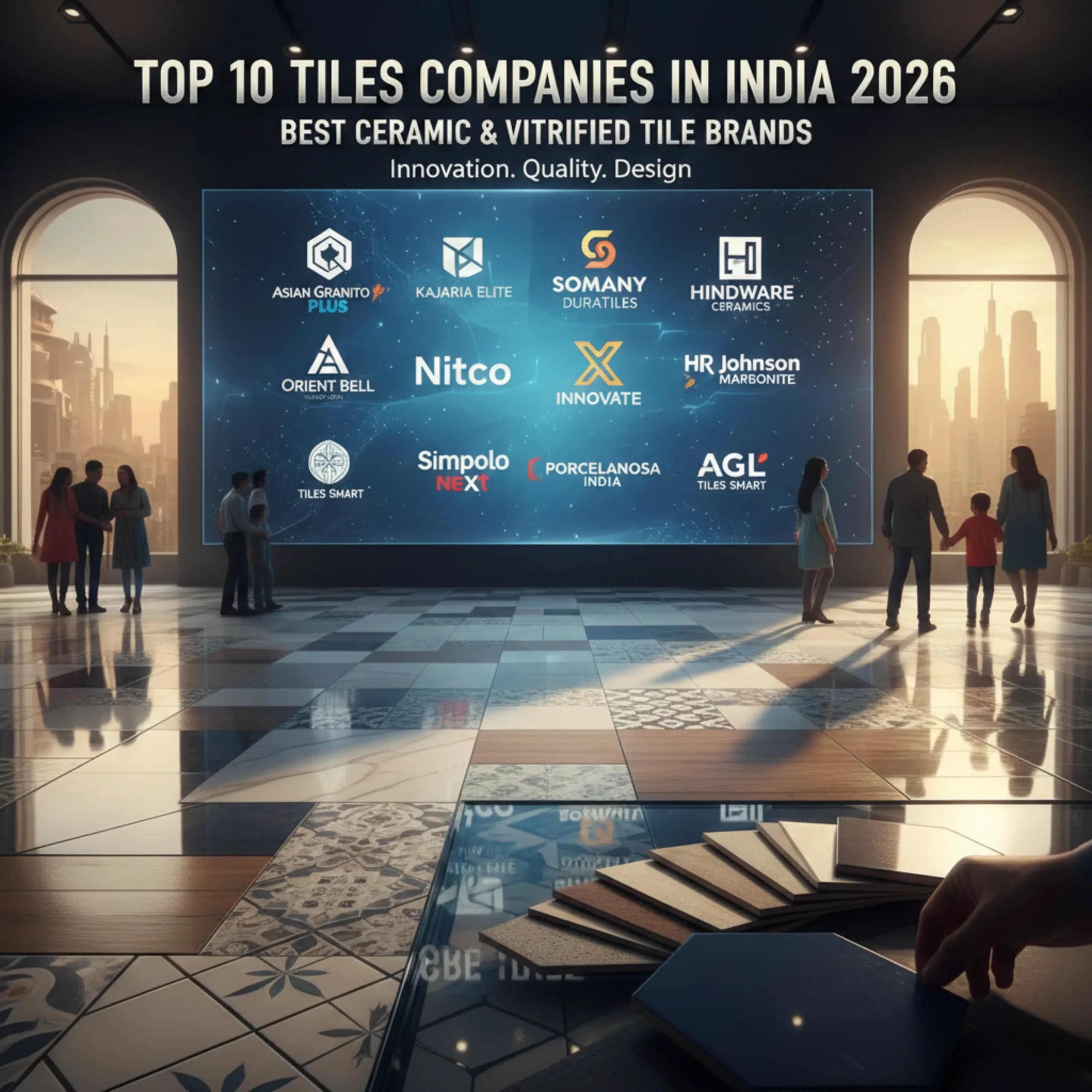
Whether you’re a homeowner, interior designer, architect, or contractor, understanding which top tile manufacturers in India truly stand out can save you thousands of rupees and countless headaches down the road. This comprehensive guide walks you through the top 10 tiles companies in India 2026, breaking down what makes each brand exceptional, what they specialize in, and most importantly, how to pick the right one for your space.
Section 1: Understanding the Indian Tiles Market Landscape
The Booming Ceramic Tiles Industry in India
India’s tile industry hasn’t just grown – it’s transformed. The Indian ceramic tiles market was valued at USD 5.86 Billion in 2024 and is expected to reach USD 12.10 Billion by 2032, growing at an impressive CAGR of 9.49%. What’s driving this explosion?
Urbanization and Construction Boom: With over 93% of Smart Cities Mission projects completed by March 2025, government initiatives are fueling massive infrastructure and housing development. Millennials and Gen Z are moving to urban centers, demanding modern, aesthetically appealing homes.
Rising Disposable Incomes: India’s middle class is expanding rapidly. More families can now afford premium tiles beyond basic ceramic options. They’re willing to invest in durability and design.
Export Powerhouse: India isn’t just a consumer market – it’s a global exporter. The country has developed world-class manufacturing capabilities, particularly in Morbi, Gujarat, which has emerged as a globally significant hub for ceramic tile manufacturing with 28% of the total market share in West and Central India.
Types of Tiles: What Are You Actually Buying?
Before diving into the top 10 tiles companies in India, you need to understand what you’re choosing between. The three main categories are:
Ceramic Tiles: Made from clay fired at 1000-1100°C, these offer versatility and cost-effectiveness. They have a water absorption rate of around 3-20% and work well for low-traffic areas like bedrooms and dining rooms. Think of them as the reliable sedan of the tile world – practical, affordable, and suitable for most needs.
Vitrified Tiles: Manufactured at extremely high temperatures (1200-1300°C) with a composition of silica, clay, quartz, and feldspar, vitrified tiles are the premium option. They boast water absorption below 0.5%, making them nearly waterproof and perfect for bathrooms, kitchens, and high-traffic areas. These are your luxury sports cars – higher upfront investment but exceptional durability and performance.
Porcelain Tiles: The most durable option, porcelain tiles are non-porous and engineered for extreme durability. They’re ideal for commercial spaces and outdoor applications.
Section 2: The Problem Homeowners Face When Choosing Tile Brands
Pain Point #1: The Overwhelming Number of Choices
You’re standing in a showroom with 500+ designs staring back at you. Each salesperson claims their tiles are the “best.” The prices range from ₹50 per square foot to ₹500+. No wonder decision paralysis sets in.
The real problem? Most people don’t know the difference between a legitimately high-quality tile and one that just looks good in the showroom. A beautiful tile that cracks within two years is a nightmare – not an investment.
Pain Point #2: Durability Concerns
Poor tile installation and manufacturing defects plague Indian homes. Common issues include:
- Hollow tiles and poor adhesion causing tiles to pop and crack within 6-12 months
- Staining and moisture penetration in supposedly “waterproof” tiles
- Uneven joints and misaligned patterns that compromise aesthetics
- Grout failure and water seepage leading to structural damage
According to tile installation experts in India, the difference between a ₹50/sq.ft. and ₹100/sq.ft. installation is years of peace of mind. Quality matters – both in the product and the brand behind it.
Pain Point #3: Understanding Brand Reputation
How do you separate genuine quality from marketing hype? Some brands have been manufacturing tiles for over 50 years. Others are newcomers leveraging social media buzz. Size of factory doesn’t equal quality. Price doesn’t guarantee durability.
This is where understanding the top tile companies in India 2026 becomes critical. These aren’t just random picks – they’re brands with proven track records, certifications (ISO 9001, ISO 14001), manufacturing capacity, and customer satisfaction metrics.

Section 3: Top 10 Tiles Companies in India 2026 – Complete Breakdown
1. Kajaria Ceramics Limited – The Market Leader
Founded: 1988 | Headquarters: New Delhi | Valuation: Approx ₹20,000 Cr | Revenue: ₹4,000+ Cr
Why Kajaria dominates: Kajaria isn’t just a tile company – it’s the largest manufacturer of ceramic and vitrified tiles in India. Period. With a manufacturing capacity of 86.47 million square meters and six advanced manufacturing facilities, they produce over 2,100 tile designs.
What sets Kajaria apart? Automation and precision. Their Gailpur manufacturing plant in Rajasthan is among the most advanced in Asia. Every tile is checked for consistency, thickness, and finish. They export to over 30 countries worldwide, meaning they’ve passed international quality standards.
Who should choose Kajaria? Anyone who wants the safety of the market leader. Their tiles are durable, their designs are trendy, and their after-sales service is reliable. Perfect for both residential and commercial projects.
Price Range: ₹80-₹400+ per square foot depending on design and finish
2. Somany Ceramics Limited – The Legacy Brand
Founded: 1969 | Headquarters: Uttar Pradesh | Revenue: ₹326.75 Cr | Market Share: Strong domestic presence
Why Somany endures: When Somany started in 1969, they were literally building the Indian tile industry from scratch. Over five decades of experience means they’ve seen trends come and go. Their VC Shield technology provides scratch resistance, stain protection, and antibacterial properties – perfect for Indian kitchens and bathrooms.
Somany manufactures ceramic tiles, glazed vitrified tiles, digital vitrified tiles, and smart tiles – a comprehensive portfolio designed for every budget and aesthetic preference.
Who should choose Somany? Homeowners who want innovation backed by heritage. Their tiles feature eco-friendly materials and sustainable manufacturing practices, appealing to environmentally conscious consumers.
Price Range: ₹70-₹350 per square foot
3. Asian Granito India Ltd (AGL) – The Growth Powerhouse
Founded: 2000 | Market Position: One of the fastest-growing tile companies in India
Why AGL is rising: Founded just in 2000, AGL has already become a major player. They’re younger, more agile, and heavily focused on innovation and design. Their product portfolio extends beyond tiles to include sanitaryware, marble, and quartz – a one-stop solution.
AGL’s strength? Quick adaptation to market trends. They closely follow international design movements and bring them to India at accessible price points. Their export base is strong, meaning they understand global quality standards.
Who should choose AGL? Design-conscious homeowners and architects who want contemporary aesthetics without premium pricing. Ideal for modern homes and commercial spaces.
Price Range: ₹60-₹300 per square foot
4. Simpolo Ceramics – The Design Innovation Leader
Founded: 1977 | Headquarters: Morbi, Gujarat | Revenue: ₹500+ Cr | Manufacturing Capacity: 22,000+ square meters
Why Simpolo leads in design: Located in Morbi, India’s tile manufacturing heartland, Simpolo is synonymous with trendsetting designs and award-winning innovation. They specialize in large-format tiles and digital printing technology, creating realistic textures that mimic marble, wood, and stone.
Their Glyphstone Collection (ancient petroglyphs reimagined) and Marmorica Collection (timeless marble elegance) are Instagram-worthy and architecturally impressive. Water-resistant, perfect for Indian climates, and available in premium large-format options.
Who should choose Simpolo? Interior designers, architects, and homeowners who prioritize aesthetics and are willing to invest in premium vitrified tiles. Perfect for luxury residential and high-end commercial projects.
Price Range: ₹150-₹500+ per square foot
5. NITCO Limited – The Premium Craftsmanship Pioneer
Founded: Over 70 years of heritage | Market Position: Premium segment leader
Why NITCO commands respect: With seven decades of manufacturing excellence, NITCO has earned a reputation for uncompromising quality and distinctive design. Their tiles feature rigorous quality checks and come in glossy, matte, and textured finishes catering to diverse style preferences.
NITCO is the choice of luxury homebuilders and five-star hotels. Their tiles aren’t just functional – they’re statements of refinement.
Who should choose NITCO? Discerning homeowners, luxury developers, and commercial establishments wanting premium tiles that reflect their status. Budget: substantial, but justified by longevity.
Price Range: ₹200-₹600+ per square foot
6. H & R Johnson (India) Limited – The International Standard Bearer
Founded: 1958 (as Prism Cement Ltd) | Headquarters: Mumbai | Market Reach: 50+ branches across India + international presence
Why H&R Johnson leads: Operating since 1958, H&R Johnson has expanded across South Asia, including Sri Lanka, Bangladesh, and Nepal. They’re known for product quality and timely delivery – critical factors for architects and contractors managing tight timelines.
Their focus on hygienic tile solutions (especially important post-COVID) and premium designs has made them a go-to brand for residential and commercial projects. Available in ceramic, vitrified, and specialized product lines.
Who should choose H&R Johnson? Project contractors, bulk buyers, and those requiring consistent quality across multiple batches. Their extensive distribution network ensures availability and after-sales support.
Price Range: ₹80-₹400 per square foot
7. Varmora Granito – The Affordable Luxury Player
Headquarters: Morbi, Gujarat | Known For: Strong in GVT (Glazed Vitrified Tiles)
Why Varmora offers value: “Beauty, strength, and smart pricing” is Varmora’s mantra. They specialize in marble and stone-look vitrified tiles that bring elegance to modern and contemporary spaces without the premium price tag of authentic marble.
Located in Morbi, they benefit from efficient supply chains and economies of scale, passing savings to consumers. Their GVT tiles are stylish, durable, and affordable – the perfect trifecta for budget-conscious homeowners.
Who should choose Varmora? Homeowners wanting designer looks on a reasonable budget. Perfect for residential projects where aesthetics matter but premium pricing isn’t feasible.
Price Range: ₹60-₹280 per square foot
8. Orient Bell Limited – The Retail and Design Variety Master
Market Position: Strong in retail channels and design diversity
Why Orient Bell appeals: Orient Bell excels in retail-focused distribution and offers exceptional design variety. They understand consumer psychology – what catches the eye in a showroom often sells. Their extensive dealer network makes them accessible to average homeowners.
They offer everything from basic ceramic to premium vitrified tiles, ensuring they have something for every budget and style preference.
Who should choose Orient Bell? Homeowners shopping through traditional retail channels who want a wide selection. Great for those who like seeing and touching tiles before buying.
Price Range: ₹50-₹350 per square foot
9. RAK Ceramics India – The Global Giant’s Indian Presence
Origin: UAE-based brand with strong Indian operations | Known For: Global quality standards
Why RAK brings international expertise: RAK Ceramics is a world-class brand blending beauty, durability, and innovation. Their focus on eco-friendly manufacturing and sustainable practices appeals to environmentally conscious consumers.
Perfect for both residential and commercial spaces, with diverse textures and finishes. RAK’s global presence means they’re constantly innovating based on international design trends.
Who should choose RAK? Those wanting international quality standards with competitive Indian pricing. Ideal for commercial spaces and environmentally aware homeowners.
Price Range: ₹90-₹420 per square foot
10. Sunwin Ceramica – The Emerging Innovation Hub
Founded: 2014 | Market Position: Rapidly rising challenger brand
Why Sunwin is gaining momentum: Despite being founded in 2014, Sunwin Ceramica has rapidly become a top contender. Their focus on glazed vitrified tiles, subway tiles, porcelain slab tiles, and high-tech manufacturing has earned recognition among architects and designers.
Committed to innovation and quality, they’re making tiles trendy for a younger demographic. Their export-driven segment is growing, indicating strong international appeal.
Who should choose Sunwin? Modern homeowners and designers seeking contemporary aesthetics. Emerging brand with competitive pricing and innovation-focused product development.
Price Range: ₹70-₹350 per square foot
Section 4: Ceramic vs. Vitrified Tiles – Making the Right Choice for Your Space
The Critical Decision: Which Type Should You Choose?
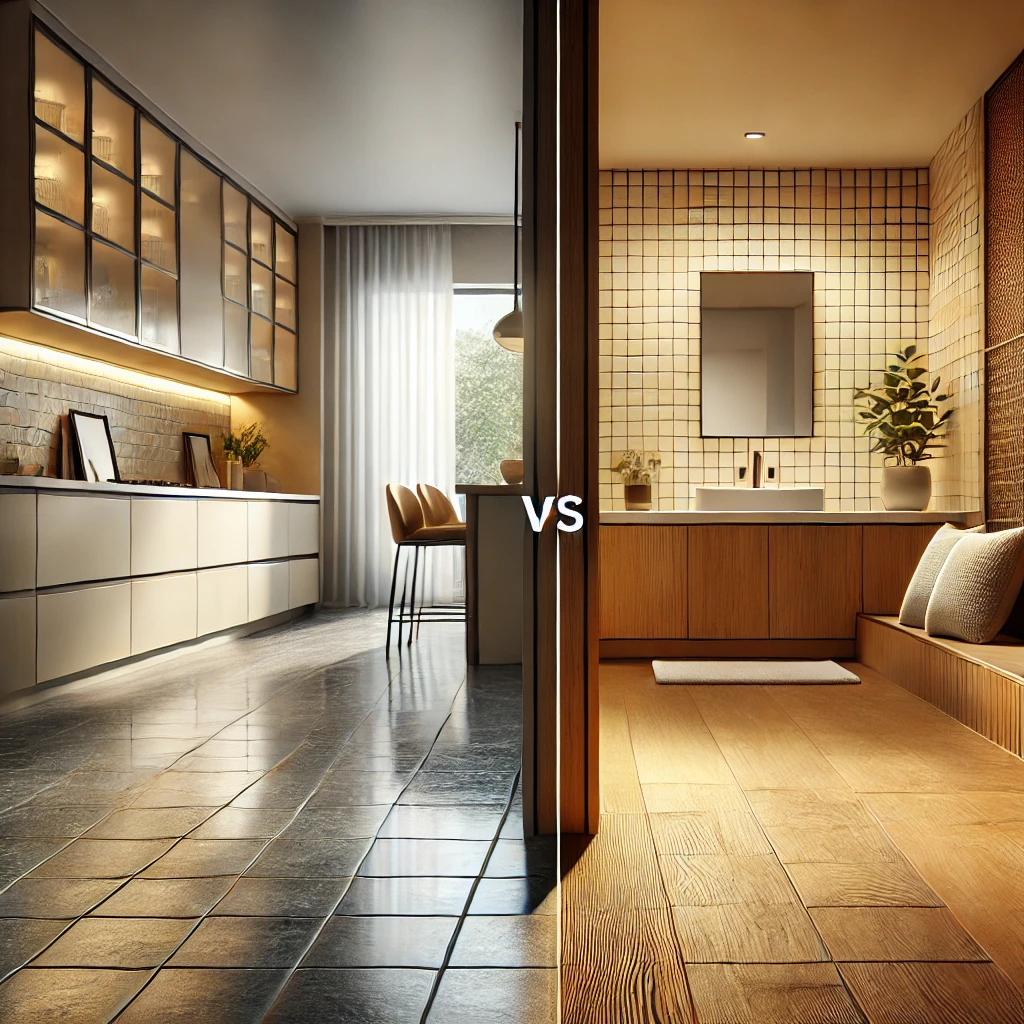
This is where most people go wrong. They see a beautiful tile design and buy it without considering whether it’s suitable for their space. Let’s break down the real differences:
| Aspect | Ceramic Tiles | Vitrified Tiles |
| Water Absorption | 3-20% (porous) | <0.5% (non-porous) |
| Durability | Moderate (good for low-traffic) | Exceptional (high-traffic champion) |
| Stain Resistance | Lower (requires sealing) | Superior (naturally stain-resistant) |
| Maintenance | More demanding | Minimal, just wipe clean |
| Cost | ₹50-₹150/sq.ft. | ₹100-₹500+/sq.ft. |
| Best Use | Bedrooms, low-traffic walls | Kitchens, bathrooms, living areas |
| Lifespan | 15-20 years | 25-30+ years |
Here’s the real-world takeaway: Think of ceramic tiles like renting and vitrified tiles like buying property. Ceramic saves money upfront; vitrified saves money long-term through durability and reduced maintenance.
Expert Recommendation Checklist
Choose CERAMIC tiles if:
- You have a tight budget
- The area is low-traffic (guest bedrooms, pantry)
- You prioritize aesthetic variety over durability
- You don’t mind replacing tiles after 15-20 years
Choose VITRIFIED tiles if:
- High-traffic areas (living room, kitchen, entryway)
- Moisture-prone spaces (bathrooms, kitchens)
- Long-term durability is your priority
- You want minimal maintenance
- You’re designing a permanent residence
Section 5: Advanced Tips for Selecting the Perfect Tile Brand
Tip #1: Verify Manufacturing Standards and Certifications
Don’t just ask – demand proof. All legitimate top tile companies in India should have:
- ISO 9001:2015 (Quality Management System)
- ISO 14001:2015 (Environmental Management)
- OHSAS 18001 (Occupational Health & Safety)
These certifications mean independent auditors have verified their manufacturing processes. It’s the difference between a brand claiming quality and proving it.
Tip #2: Calculate Long-Term Cost, Not Just Purchase Price
A common mistake: Buying ₹80/sq.ft. tiles that crack and stain within 5 years versus ₹200/sq.ft. tiles lasting 25+ years.
Cost analysis: 200 sq.ft. living room:
- Cheap tiles: ₹80 × 200 = ₹16,000 (replaced every 5 years = ₹64,000 over 20 years)
- Quality tiles: ₹200 × 200 = ₹40,000 (lasts 20+ years = ₹40,000)
Quality tiles win.
Tip #3: Test Before You Commit
Smart tip: Buy a small sample pack (2-3 tiles), install them in a discreet area, and live with them for 2-3 weeks. Check for:
- Staining resistance (spill water, coffee, cooking oil)
- Durability (walk on them with shoes)
- Slip resistance (test in wet conditions)
- Aesthetic durability (does the color fade?)
Tip #4: Check Customer Reviews and Service Network
The best indicator of brand quality? Not marketing, but customer satisfaction. Before finalizing:
- Visit brand showrooms in your city
- Ask to connect with recent customers
- Check Google reviews (especially 3-4 star reviews for honest feedback)
- Verify service center locations for warranty claims
Tip #5: Consult with Your Architect/Interior Designer
Professional opinion matters. A good designer knows which brands work best in your climate, with your budget, and for your specific needs. They often have relationships with brands, ensuring quality and timely delivery.
Section 6: Common Mistakes to Avoid When Choosing Tile Brands
Mistake #1: Ignoring Surface Preparation
Poor surface prep causes 70% of tile problems. Even the best tiles fail on unprepared surfaces. The wall/floor must be:
- Level (within 3mm variance)
- Clean (dust-free)
- Dry
- Properly primed
Mistake #2: Choosing Tiles Based Solely on Showroom Appearance
Harsh truth: Showroom lighting is deliberately designed to make tiles look stunning. In your actual space, under different lighting, the same tile might look completely different.
Solution: Get large sample tiles, install them in your actual space, and observe under your home’s natural and artificial lighting.
Mistake #3: Skipping Expansion Joints
Tiles expand and contract with temperature and humidity. Without proper 2-3mm grout joints, tiles push against each other and crack. This isn’t the brand’s fault – it’s installation negligence.
Mistake #4: Selecting the Wrong Grout Type
Cheap grout = future headaches. Use epoxy grout in wet areas (bathrooms, kitchens) to prevent moisture seepage, mold, and discoloration. Premium grout costs ₹20-30 more per sq.ft. but prevents ₹50,000+ in water damage repairs.
Mistake #5: Not Considering Climate and Local Conditions
India is diverse. What works in coastal Kerala (humidity) differs from Delhi (temperature extremes). Always consult local experts and choose brands with proven performance in your region.
Section 7: Data-Driven Insights into the Tiles Market
Market Growth Statistics
The Indian tiles industry is witnessing explosive growth:
- Market Size 2024: USD 5.86 Billion
- Projected 2032: USD 12.10 Billion
- CAGR: 9.49%
- Floor tiles dominate: 52% of market share (superior durability and low maintenance)
- Residential applications lead: 55% market share (driven by urbanization and home renoveries)
Consumer Behavior Insights
According to recent market research, Indian consumers prioritize:
- Durability (82%) – Most important factor
- Aesthetics (76%) – Design matters, but not at the cost of quality
- Price (64%) – Willing to pay more for proven quality
- Brand Reputation (58%) – Trust established brands
- After-Sales Service (45%) – Warranty and support matter
Section 8: FAQs About Top Tile Companies in India
FAQ 1: Which tile company offers the best warranty?
Answer: Most top 10 tiles companies in India offer 5-10 year warranties against manufacturing defects. However, warranties don’t cover installation defects, improper maintenance, or natural wear. Always read the fine print. Kajaria, Somany, and NITCO typically offer comprehensive warranties with strong claim settlement records.
Pro tip: Warranty is only valuable if the brand has service centers in your city. Check this before buying.
FAQ 2: Are imported tiles better than Indian-manufactured tiles?
Answer: Not necessarily. Indian tile manufacturers, especially those in Morbi, now produce world-class tiles competing globally. Many international brands actually source from India. The difference isn’t origin but brand reputation, quality control, and innovation. Companies like Kajaria and Simpolo export globally, meaning they meet international standards.
FAQ 3: What’s the average cost difference between ceramic and vitrified tiles?
Answer: Ceramic tiles typically cost ₹50-₹150 per sq.ft., while vitrified tiles range from ₹100-₹500+ per sq.ft.. The price difference reflects manufacturing complexity (vitrified tiles require higher temperatures and more precise processes). However, when you consider durability and maintenance, vitrified tiles often represent better long-term value.
FAQ 4: How do I identify authentic tiles from counterfeit ones?
Answer: Several red flags indicate counterfeit tiles:
- Inconsistent color/pattern in the batch
- Uneven thickness
- Weak packaging
- Extremely low prices (₹30/sq.ft. for premium brands)
- Shops without proper authorization certificates
Verification: Always buy from authorized dealers. Most brands have dealer locators on their websites.
FAQ 5: Do I need different tiles for different rooms?
Answer: Yes, ideally. Different rooms have different requirements:
- Kitchens/Bathrooms: Vitrified, anti-slip, water-resistant
- Living Areas: Vitrified (high-traffic) or premium ceramic
- Bedrooms: Ceramic or vitrified, depending on traffic
- Outdoor areas: Premium vitrified or porcelain (weather-resistant)
A hybrid approach – vitrified in high-demand areas and ceramic in secondary spaces – optimizes both performance and budget.
Section 9: The Role of Design Trends in 2026
Current Trends Reshaping Tile Selection
Large-format tiles: 1200×2400mm tiles are trending, creating seamless installations and modern aesthetics. Brands like Simpolo are leading this innovation.
Natural material mimicry: Realistic marble, wood, and stone textures created through digital printing technology are replacing actual stone due to cost and durability advantages.
Sustainable choices: Eco-conscious consumers are choosing brands implementing sustainable manufacturing. Varmora and RAK focus heavily on this.
Matte finishes: Glossy vitrified tiles are giving way to EverMatt and Sabbia finishes (matte texture) offering sophistication and slip resistance.
Section 10: How to Compare Tile Brands Objectively
The Comparison Matrix
When evaluating top tiles companies in India, use this matrix:
| Factor | Weight | Kajaria | Somany | Simpolo | NITCO |
| Quality | 30% | 9.5/10 | 9/10 | 9/10 | 9.5/10 |
| Design Variety | 20% | 8.5/10 | 8/10 | 9.5/10 | 8/10 |
| Price Value | 20% | 8/10 | 8.5/10 | 6.5/10 | 6/10 |
| Service Network | 15% | 9.5/10 | 9/10 | 7.5/10 | 8/10 |
| Innovation | 15% | 8.5/10 | 8/10 | 9.5/10 | 8/10 |
| OVERALL SCORE | 100% | 8.6/10 | 8.5/10 | 8.6/10 | 8.2/10 |
Interpretation: All top brands score similarly overall because they excel in different areas. Your choice depends on what matters most to you.
Section 11: Where to Buy – Online vs. Offline
Offline Showrooms (Traditional Route)
Advantages: See and touch tiles, immediate advice, no shipping delays
Best for: First-time buyers, large orders, those wanting personalized consultation
Popular channels: Direct brand showrooms, authorized dealers, large home centers (Bengaluru, Mumbai, Delhi have extensive tile showrooms)
Online Platforms
Advantages: Competitive pricing, convenience, detailed specifications, customer reviews
Challenges: No tactile experience, shipping fragility, returns complexity
Popular platforms: Amazon, Flipkart, brand websites (most top tile companies in India now have direct e-commerce)
Pro tip: Order samples online, verify in your space, then buy in bulk from offline sources where you can negotiate on bulk orders.
Section 12: Warranty, Support, and After-Sales Service Comparison
What Every Brand Should Provide
All legitimate brands offer:
- Manufacturing defect warranty (typically 5-10 years)
- Color consistency guarantee
- Thickness and size consistency
- Technical support for installation
Premium brands additionally offer:
- Extended warranties (15+ years)
- Easy replacement processes
- Field support for large projects
- Design consultation services
Top performers: Kajaria and H&R Johnson lead in after-sales service, particularly for commercial projects requiring comprehensive support.
For more detailed comparisons and expert insights, visit tilesblog for updated reviews and market analysis.
Section 13: Checklist – Your Ultimate Tile Selection Guide
Pre-Purchase Checklist
Step 1: Define Requirements
- Identify room type (kitchen, bathroom, living area, etc.)
- Determine traffic level (high/moderate/low)
- Assess moisture exposure
- Set budget per sq.ft. and total project cost
- Decide on style preference (modern, traditional, contemporary)
Step 2: Research Brands
- List 3-4 brands matching your requirements
- Verify certifications (ISO standards)
- Check customer reviews (aim for 4+ average rating)
- Confirm service center locations in your city
- Compare warranty terms
Step 3: Sample and Test
- Order sample tiles from shortlisted brands
- Install samples in your actual space
- Test stain resistance
- Evaluate slip resistance (especially for bathrooms)
- Observe under natural and artificial lighting for 1-2 weeks
Step 4: Calculate Total Cost
- Product cost (tiles + grout + adhesive + sealer)
- Installation labor (₹20-50/sq.ft. depending on complexity)
- Maintenance costs over 20 years
- Replacement costs if durability issues arise
Step 5: Finalize and Execute
- Select the winning brand
- Buy from authorized dealers only
- Verify sample batch matches bulk order
- Ensure proper surface preparation before installation
- Hire qualified installers (critical!)
- Document everything (receipts, warranties, batch codes)
Section 14: The Future of Indian Tile Industry (2026 and Beyond)
What’s Coming Next
Technological innovations: AI-powered design matching, AR try-before-you-buy apps, and sustainable manufacturing will dominate 2026-2028.
Sustainability push: Eco-friendly manufacturing and recycled content tiles will grow from niche to mainstream as consumers demand environmental responsibility.
Direct-to-consumer models: Brands are increasingly bypassing dealers, offering better pricing directly through their websites and apps.
Customization: Large-format tiles and digital printing enable unprecedented customization, allowing homeowners to create truly unique spaces.
Smart tiles: Yes, tiles with embedded sensors for smart homes are coming – temperature-responsive colors, anti-bacterial surfaces, and integrated lighting.
Conclusion: Making Your Final Decision
Choosing from the top 10 tiles companies in India 2026 isn’t about finding the “best” brand – it’s about finding the best brand for your specific needs, budget, and space.
Here’s what we’ve covered: Kajaria leads in market presence and reliability, Simpolo excels in design innovation, Somany offers heritage and sustainability, NITCO provides premium craftsmanship, and emerging players like Sunwin bring fresh perspectives.
The Indian tiles market is robust, competitive, and consumer-friendly. Whether you choose a market leader or an emerging innovator, you’re likely getting quality. The difference lies in service, design variety, and pricing.
Your action plan:
- Define your specific requirements
- Shortlist 2-3 brands from our top 10
- Order samples and test thoroughly
- Calculate total cost (product + installation + maintenance)
- Buy from authorized dealers, hire skilled installers
- Document everything for warranty purposes
Remember: The cheapest tile today becomes the most expensive mistake tomorrow. Invest wisely in quality, durability, and brand reputation. Your home deserves nothing less.
Frequently Asked Questions (5 Original FAQs)
Q1: How do I know if a tile company is genuinely in the “top” tier versus just marketing themselves that way?
A1: Look beyond marketing claims. Genuine top-tier brands have: (1) Verifiable manufacturing capacity (publicly disclosed), (2) ISO certifications, (3) Consistent customer reviews across multiple platforms, (4) Presence in major construction projects (ask architects), (5) Strong export presence (indicates international quality standards). Companies like Kajaria transparently share manufacturing details; that’s a green flag.
Q2: Can I mix tiles from different brands in one project (e.g., Kajaria in living room, Simpolo in kitchen)?
A2: Yes, but carefully. Mixing brands is fine as long as: (1) Finishes are compatible (matte with matte, glossy with glossy), (2) Tile thickness is identical (prevents height differences), (3) Grout color complements both. Professional designers often mix brands strategically. However, mixing creates installation complexity, so ensure your contractor has experience with multi-brand projects.
Q3: What’s the real difference between a tile costing ₹150/sq.ft. and one costing ₹300/sq.ft. from the same category (vitrified)?
A3: Price differences in the same category reflect: (1) Design complexity (digital printing costs more than solid colors), (2) Brand premium (established brands charge more than emerging ones), (3) Size and format (large-format tiles cost more to manufacture), (4) Finish quality (EverMatt and Sabbia finishes cost more than standard), (5) Production batches (limited edition designs cost more). The costlier tile isn’t always “better” – it’s often “different.” Buy based on your needs, not price alone.
Q4: Is it worth buying tiles online versus offline?
A4: Hybrid approach works best. Buy samples online to compare multiple brands quickly and affordably. This saves time versus visiting multiple showrooms. Once you’ve narrowed down, buy bulk from offline sources where you can: (1) Negotiate on volume, (2) Verify batch consistency before payment, (3) Return defective pieces immediately, (4) Get direct contractor guidance. Online is great for research; offline is better for execution.
Q5: How do climate conditions affect which tile brand to choose?
A5:Climate significantly impacts tile durability. Coastal regions (Kerala, Maharashtra): Choose anti-corrosion, moisture-resistant tiles from brands like RAK with eco-friendly manufacturing. Cold regions (Himachal, J&K): Avoid high-porosity ceramic; choose vitrified with low water absorption to prevent freeze-thaw damage. Hot-dry regions (Rajasthan, Gujarat): Any quality brand works; focus on UV-resistant finishes and matte finishes (less heat absorption). Desert regions: Thermal shock resistance matters – vitrified tiles from established brands like Kajaria handle temperature extremes better. Always ask brand representatives about climate suitability for your region.