
The global construction and interior design sectors are undergoing a radical shift as sustainability moves from a niche preference to a mandatory industry standard. Recent data highlights a significant pivot toward eco friendly tiles for kitchens, driven by both consumer demand and stringent new green building certifications. Manufacturers are responding by unveiling advanced porcelain and ceramic products that utilize record-breaking levels of recycled material without compromising the rigorous durability requirements of high-traffic culinary environments. From massive industrial recyclers to artisanal studios, the push toward a circular economy is redefining how kitchen surfaces are sourced, manufactured, and repurposed.
Industry leaders are now prioritizing the “Triple Bottom Line”—people, planet, and profit—by integrating post-consumer waste directly into high-fire production lines. This trend is not merely aesthetic; it is a technical evolution. Recent breakthroughs have allowed for the inclusion of discarded tableware, glass, and even industrial clay waste into premium tile bodies. As architects and developers increasingly target LEED (Leadership in Energy and Environmental Design) certification, the selection of eco friendly tiles for kitchens has become a critical component of modern sustainable building strategies.
The Porcelain Revolution: High Recycled Content and Circular Economy Principles
Porcelain has long been favored for its density and moisture resistance, but its traditional manufacturing process is energy-intensive. However, 2025 market reports indicate a shift toward high-recycled-content porcelain that mitigates this environmental footprint. Specifically, the Daltile Colour Scheme series has set a new benchmark, incorporating over 60% pre- and post-consumer recycled material. This level of reclamation is unprecedented for a product designed to withstand the heavy foot traffic and frequent spills common in residential and commercial kitchens.
The technical advantages of these materials extend beyond their recycled origins. According to recent analysis from Ramirro, modern eco-tiles are engineered for areas where hygiene is paramount. Because porcelain is fired at extreme temperatures, it becomes virtually non-porous. This inherent quality makes it resistant to mold, bacteria, and moisture, which are primary concerns in kitchen environments. Furthermore, while the firing process itself makes porcelain difficult to melt down and recycle once more, the industry is moving toward a “reuse” model. Tiles containing recycled content contribute to the circular economy by extending the life of industrial materials that would otherwise occupy landfills.
Technical Specifications of Sustainable Porcelain
| Feature | Standard Porcelain | Eco-Friendly Porcelain (2025 Standards) |
|---|---|---|
| Recycled Content | 0% – 5% | 20% – 65%+ |
| Moisture Absorption | < 0.5% | < 0.1% |
| Certification Potential | Minimal | LEED, USGBC, Carbon Neutral |
| Manufacturing Source | Virgin Clay/Feldspar | Post-Industrial Ceramic Waste/Glass |
Backsplash Innovations: Recycled Ceramics and Aesthetic Sustainability
While flooring requires high mechanical strength, kitchen backsplashes offer an opportunity for creative material reclamation. High-end designers are increasingly turning to series like the Ann Sacks Savoy collection. This series utilizes “Eco-Thinking” manufacturing protocols to incorporate roughly 21% post-industrial recycled content. This includes ceramic waste from discarded clay and tableware pieces—essentially turning the broken remnants of previous manufacturing cycles into a premium design element.
This approach to eco friendly tiles for kitchens solves a major industrial waste problem. In traditional ceramic manufacturing, a significant percentage of product is discarded due to minor imperfections. By pulverizing these “seconds” and reintegrating them into new tile bodies, companies are drastically reducing their raw material extraction. The resulting products maintain the same vitreous qualities and vibrant glazes as virgin materials, proving that environmental responsibility does not necessitate a compromise in luxury or style.
Industry experts suggest that backsplash applications are the ideal testing ground for new sustainable glazes. Researchers are currently exploring low-VOC glazing techniques that reduce the off-gassing of volatile organic compounds during the kiln process. This contributes to better indoor air quality, a factor that is becoming just as important as the carbon footprint of the material itself.
The Return of Earth-Based Materials: Terracotta and Natural Clay
For those seeking a more organic aesthetic, the focus is shifting back to the origins of ceramic craft. Terracotta, a clay-based ceramic, is seeing a resurgence in high-end kitchen designs. According to recent reporting from Tiles and Deco, terracotta is both eco-friendly and timeless. Because it is often produced with minimal chemical additives and fired at lower temperatures than porcelain, its initial carbon debt is significantly lower.
However, the use of natural eco friendly tiles for kitchens requires a nuanced understanding of maintenance. Unlike porcelain, terracotta is naturally porous. To prevent water damage and staining from oils or acidic foods in a kitchen setting, these tiles must be sealed with high-quality, eco-conscious sealants. This “living finish” appeals to a segment of the market that values the patina and history of natural materials over the sterile uniformity of synthetic surfaces. Additionally, the same reports highlight the niche use of wood-mimicking tiles and cork-based alternatives, which reduce deforestation by utilizing rapidly renewable resources or repurposed timber fibers.
Key Benefits of Natural Earth Tiles:
- Reduced Embodied Energy: Lower firing temperatures translate to lower fuel consumption.
- Biodegradability: Unlike many composite materials, pure clay tiles can eventually return to the earth without leaching toxins.
- Thermal Mass: Terracotta and stone tiles provide excellent thermal mass, helping to regulate kitchen temperatures and potentially reducing HVAC loads.
Corporate Responsibility and Green Building Certifications
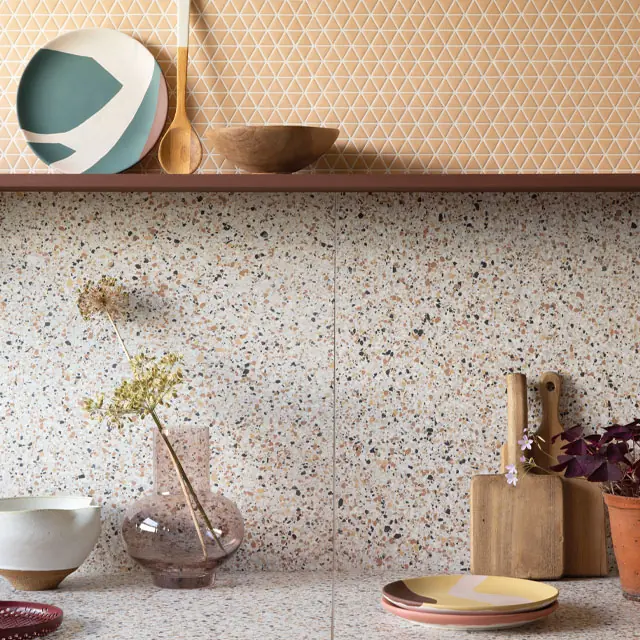
The push for eco friendly tiles for kitchens is not just a consumer-led movement; it is being codified by professional organizations. Livden, a leader in sustainable surface design, emphasizes the importance of working with manufacturers who are active members of the U.S. Green Building Council (USGBC). Their Polar Ice Terrazzo tiles, for example, are produced with a focus on preserving natural resources and reducing the depletion of virgin stone quarries.
These partnerships are vital for large-scale developments. When a developer selects a tile that is USGBC-compliant, they are effectively securing points toward LEED certification. This certification is a gold standard in the industry, often leading to higher property values and lower insurance premiums. The integration of eco friendly tiles for kitchens is a strategic move for developers who recognize that the future of real estate is green. As noted in the 2025 Green Building Outlook, the demand for verified sustainable materials has grown by 40% in the last three years alone.
The Role of Hygiene and Moisture Resistance in Eco-Tile Selection
A critical, often overlooked aspect of sustainability is longevity. A product that must be replaced every five years is inherently unsustainable, regardless of its recycled content. This is where the durability of modern eco friendly tiles for kitchens becomes its greatest environmental asset. Modern porcelain tiles with high recycled content are engineered to last 50 years or more. Their resistance to moisture prevents the growth of mold and mildew, which can compromise both the structure of a home and the health of its occupants.
The January 22, 2025, report from Ramirro underscores that these tiles are particularly suitable for areas prone to moisture. In a kitchen, where steam from cooking and frequent cleaning are constant, the non-absorbent nature of eco-friendly porcelain ensures that the surface remains hygienic without the need for harsh chemical cleaners. This creates a secondary environmental benefit: the reduction of chemical runoff into local water systems. By choosing a high-performance, sustainable tile, homeowners are investing in a product that protects their internal environment as much as the external one.
Strategic Implementation: Choosing the Right Sustainable Tile
For homeowners and architects looking to implement these materials, the selection process should involve a deep dive into the manufacturer’s supply chain. It is no longer enough for a tile to be labeled “green.” Modern transparency requires looking at the percentage of pre-consumer (industrial waste) versus post-consumer (used material) content.
Pre-consumer recycled content often includes dust and scraps from the manufacturing process that are fed back into the mix. While beneficial, post-consumer recycled content—which includes materials recovered from residential and commercial recycling programs—is often considered more impactful as it directly diverts waste from the landfill. Leading brands are now providing detailed Environmental Product Declarations (EPDs) that break down these percentages, allowing for informed decision-making.
Furthermore, the logistics of tile imports are being scrutinized. Some companies are now focusing on eco-friendly packaging and carbon-offset shipping to ensure that the environmental gains made during production aren’t lost during transit. This holistic view of the product lifecycle is what distinguishes a truly sustainable brand from one simply engaging in “greenwashing.”
Future Outlook: The Next Frontier of Sustainable Surfaces
As we look toward the remainder of the decade, the technology behind eco friendly tiles for kitchens is expected to advance even further. Researchers are experimenting with “carbon-sequestering” ceramics that actually capture CO2 during the curing process. Additionally, the rise of 3D-printed tiles allows for customized shapes that minimize material waste during installation, ensuring that every ounce of recycled clay is used effectively.
The convergence of high-tech manufacturing and ancient material science has created a marketplace where the consumer no longer has to choose between an attractive kitchen and an ethical conscience. With options ranging from 60% recycled porcelain to timeless terracotta and innovative terrazzo, the modern kitchen is becoming a showcase for environmental innovation. The transition to eco friendly tiles for kitchens is not just a trend—it is the new foundation of responsible architecture.