
Understanding the True Value Behind Clay Roof Tiles for Your Home
Are you standing on your porch, staring up at your aging roof, and wondering if there’s something better out there? The answer might be sitting right above your head—quite literally. When it comes to roofing materials, clay roof tiles represent one of the most misunderstood yet remarkably valuable investments homeowners can make. These aren’t just decorative elements; they’re sophisticated building components that have protected homes for centuries. But what exactly makes them so special, and why are more homeowners considering them as their ultimate roofing solution?
The truth is, many of us default to whatever is cheapest or most convenient without truly understanding what we’re sacrificing in quality and longevity. In this comprehensive guide, we’re diving deep into the top 10 benefits of clay roof tiles that could transform how you think about your home’s most critical protection layer. Whether you’re planning a new build, replacing an aging roof, or simply curious about what separates premium roofing from the ordinary, this article is your roadmap to understanding why clay tiles deserve serious consideration.
Why Clay Roof Tiles Matter More Than You Think
Let’s start with a fundamental question: What makes a roofing material truly excellent? It’s not just about keeping the rain out (though that’s certainly important). It’s about delivering value across multiple dimensions—durability, aesthetics, energy savings, and environmental responsibility. Clay roof tiles check all these boxes and then some.
The global clay roof tiles market is experiencing impressive growth, with the residential segment commanding approximately 42.6% of market share in 2025, primarily driven by homeowners and builders increasingly recognizing the long-term value proposition. This isn’t a trend; it’s a fundamental shift in how we view building materials.
The Cost-to-Benefit Paradox: Why Higher Initial Investment Leads to Savings
Here’s where many homeowners get stuck: clay roof tiles carry a higher upfront cost compared to asphalt shingles. On average, you’ll invest between $30,000 to $51,000 for a typical 1,700-square-foot roof installation, with material costs ranging from $6 to $20 per square foot depending on the tile type. That’s significantly more than the $1,000-$3,000 you might spend on asphalt shingles.
But here’s the game-changer: when you consider the total cost of ownership over 50, 75, or even 100 years, the numbers flip dramatically in clay’s favor. An asphalt shingle roof lasting 20-25 years means multiple replacements throughout your homeowning lifetime. Each replacement means labor, waste, and additional expenditure. Clay tiles, on the other hand, get better with age (metaphorically speaking) and require far fewer replacements.
The Top 10 Benefits of Clay Roof Tiles That Transform Your Home Investment
Benefit #1 – Exceptional Durability and Century-Long Lifespan
The Promise: Clay roof tiles can last 50 to 100 years or even longer with proper maintenance and care.
This isn’t marketing speak. Multiple studies and real-world examples confirm that well-installed and properly maintained clay tile roofs consistently outlast nearly every other roofing material available today. Some clay roofs have protected homes for well over a century, truly becoming investments that transcend generations.
Why such longevity? The answer lies in the manufacturing process. Clay tiles are formed from natural clay, mixed with water, and then fired in kilns at extremely high temperatures. This process creates a material that’s:
- Resistant to rot and decay – Unlike wood shakes or even composition shingles, clay cannot rot
- Impervious to insect damage – Termites and other wood-boring insects find no food source in fired clay
- Naturally fire-resistant – The kiln-firing process ensures clay tiles retain exceptional fire resistance ratings
- Stable in temperature fluctuations – Unlike materials that expand and contract dramatically with temperature changes, clay tiles maintain their integrity
Think about it this way: while you’re replacing asphalt shingles multiple times, your clay tile roof is just hitting its stride in terms of performance and reliability.
Benefit #2 – Superior Weather Resistance and Storm Protection
The Real-World Impact: Have you ever driven through a neighborhood after a severe storm and noticed which homes suffered damage and which remained virtually untouched? More often than not, homes with clay tile roofs emerge with minimal to no weather-related damage.
Clay roof tiles demonstrate exceptional resistance to harsh environmental conditions that would compromise lesser materials:
Wind Resistance
Clay tiles are installed using a system of overlapping and interlocking mechanisms, creating a unified structure that withstands high-velocity winds. In hurricane-prone regions and areas experiencing severe storms, clay tiles significantly reduce the likelihood of weather-related damage.
Hail and Impact Resistance
Clay tiles achieve a Class 4 impact-resistance rating from UL Solutions, the highest possible rating for roofing materials. This rating is equivalent to surviving impact from a 2-inch steel ball dropped from 20 feet. What does this mean in practical terms? Your roof shrugs off hailstones that would crack or puncture other materials.
Rain and Moisture Management
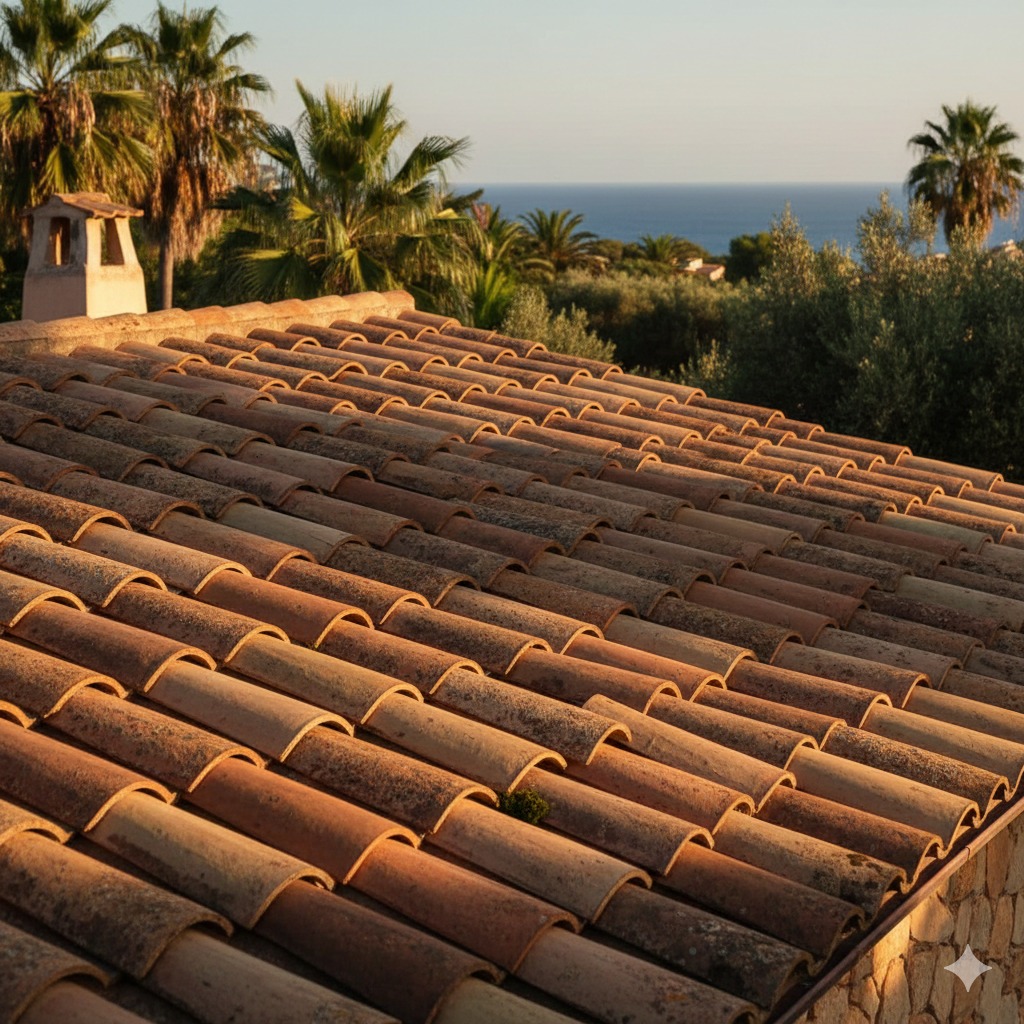
The curved, overlapping design of clay tiles creates a natural water-shedding system. Water flows predictably downward, never pooling or becoming trapped. This design has been perfected over centuries and remains remarkably effective.
Extreme Temperature Performance
Whether you’re in the scorching heat of Arizona or the freezing winters of Colorado, clay tiles maintain their structural integrity. They don’t become brittle in cold or warp in extreme heat—two common problems with asphalt shingles.
The insurance industry recognizes this protection. Homes with clay tile roofs can qualify for insurance premium discounts of 15% to 35%, with some homeowners reporting reductions as high as 20%. Why do insurers offer these discounts? Because they experience significantly fewer claims on properties with clay tile roofs.
Benefit #3 – Energy Efficiency That Reduces Monthly Utility Bills
The Comfort Factor: Imagine a roofing material that works like a sophisticated thermal regulator, keeping your home cooler in summer and warmer in winter without any additional technology or systems.
That’s precisely what clay roof tiles do, and it’s one of the most underappreciated benefits in residential roofing.
Understanding Thermal Mass
Clay tiles possess exceptional thermal mass, meaning they absorb and store heat energy during the day and release it slowly during cooler nights. This natural regulation system reduces the stress on your HVAC systems, translating directly into lower energy bills.
The Science Behind the Savings
Research conducted by Oak Ridge National Laboratory (ORNL) in partnership with the Tile Roofing Institute reveals something remarkable: the natural airflow beneath clay tiles combined with their pitched roof design creates a measurable cooling effect. Heat transfer through the roof deck into the attic space can be reduced by up to 70% compared to conventional asphalt shingle roofs.
Real Numbers for Real Savings
The U.S. Department of Energy confirms that roofing materials reflecting sunlight significantly reduce cooling costs. The Cool Roof Rating Council supports the premise that clay tiles contribute to these cooling effects, reducing reliance on air conditioning. For homeowners in hot climates, energy savings of $100-$300 monthly during summer months aren’t unusual.
Year-Round Benefits
During winter months, clay tiles provide insulation that retains heat within your home, reducing heating requirements. This means clay tiles optimize your climate control in both seasons—something few other materials can claim.
The practical result? Many homeowners report reducing their annual energy bills by 10-20% simply by switching to clay tile roofs. When you’re looking at energy savings compounded over a 50+ year lifespan, we’re talking about tens of thousands of dollars in cumulative savings.
Benefit #4 – Minimal Maintenance Requirements
The Time and Money Advantage: One of the best-kept secrets about clay roof tiles is how little they actually demand in terms of maintenance.
Unlike wood shakes that require regular treatment against decay and insects, or asphalt shingles that deteriorate progressively over time, clay tiles maintain themselves remarkably well with minimal intervention.
What You Actually Need to Do
Clay tiles require significantly less maintenance compared to other roofing materials because they:
- Don’t rot or deteriorate – The kiln-firing process has already subjected them to extreme heat, eliminating future degradation
- Resist mold and mildew – Unlike shingles that accumulate moss and mold in shaded areas, clay tiles remain naturally resistant
- Don’t require chemical treatments – Asphalt shingles often need algaecide applications; clay tiles don’t
- Maintain structural integrity – They don’t crack, warp, or lose functionality over time like other materials
Recommended Maintenance Schedule
To maximize your clay tile roof’s lifespan (and we’re talking approaching the century mark), professionals recommend:
- Annual inspections – Ideally performed by a certified contractor, these catch any minor issues before they become problems
- Professional cleaning every 3-5 years – Low-pressure power washing at $0.30 to $0.70 per square foot removes algae, dirt, and debris
- After-cleaning sealing – Optional but recommended, sealing makes future cleaning easier
- Post-storm assessment – While clay tiles rarely sustain damage, a quick check after severe weather provides peace of mind
Compare this to asphalt shingles requiring repairs every few years or wood shakes needing regular treatment—clay tiles truly are the set-it-and-forget-it option.
Benefit #5 – Aesthetic Appeal and Timeless Beauty
The Curb Appeal Factor: Let’s be honest—not all roofing materials are created equal when it comes to appearance. While function matters tremendously, the way your home looks from the street also matters.
Clay roof tiles bring an elegance and distinctiveness that no other roofing material quite captures. They tell a story of quality, permanence, and refined taste.
Why Clay Tiles Stand Out Visually
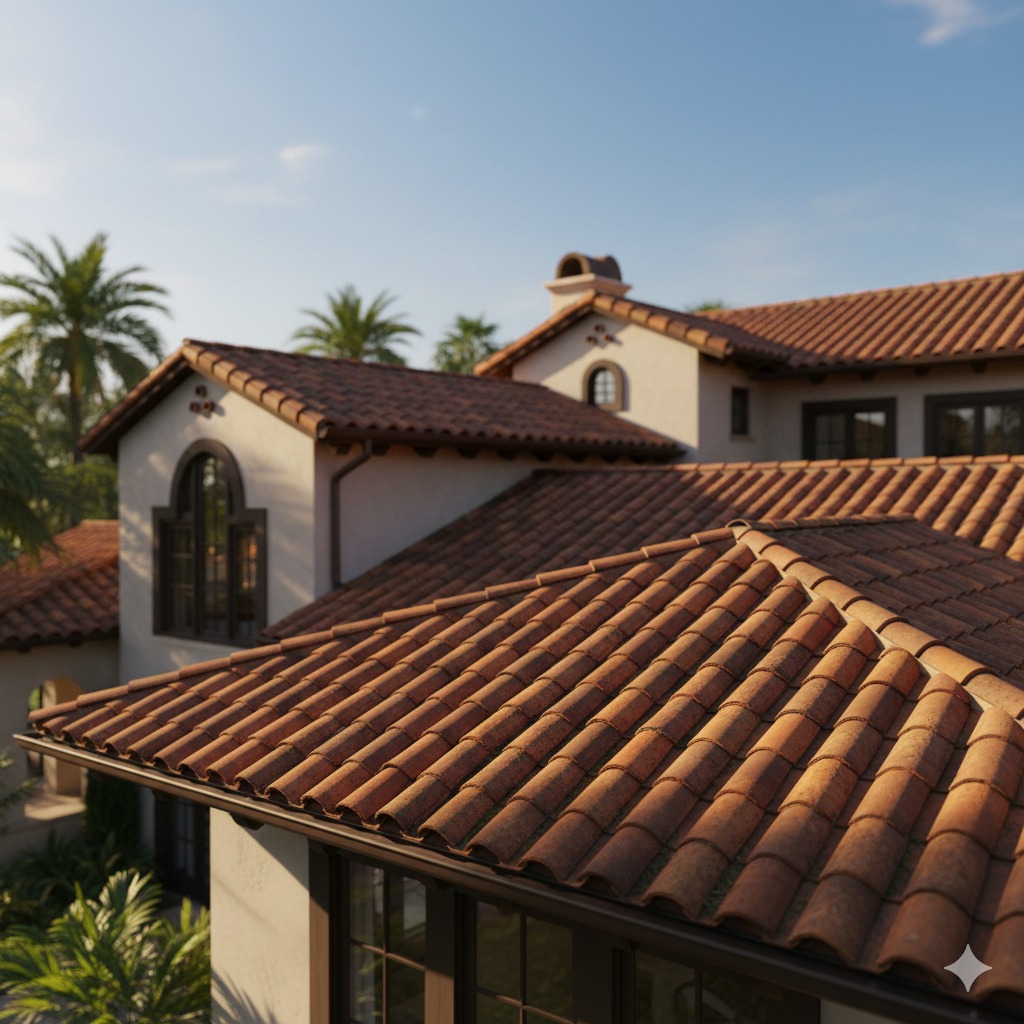
The traditional curved design of clay tiles (known as the “S” or barrel profile) creates shadows and depth that modern materials simply cannot replicate. This three-dimensional quality catches light beautifully at different times of day and adds architectural character that appeals to real estate professionals and buyers alike.
Color Options and Customization
Clay tiles aren’t limited to a single orange or terracotta color. Modern manufacturers offer an extensive range of colors and finishes:
- Traditional warm terracottas and earth tones
- Contemporary cool grays and blues
- Custom blends and hand-crafted varieties
- Glazed finishes for enhanced durability and visual pop
This flexibility means you can perfectly match your home’s architectural style whether you’re restoring a Mediterranean villa, protecting a Spanish colonial home, or enhancing a contemporary estate.
Property Value Enhancement
Real estate agents recognize the value of clay tile roofs. Homes with quality clay tile roofs often command premium prices and sell faster. While an asphalt roof replacement yields approximately 60% ROI, a metal roof yields about 55% ROI—a clay tile roof’s ROI is competitive or better, especially in warmer markets where clay tiles are particularly valued.
The visual sophistication of clay tiles communicates permanence and quality to potential buyers, often justifying higher asking prices.
Benefit #6 – Environmental Responsibility and Sustainability
The Green Factor: If you care about your environmental impact (and increasingly, more homeowners do), clay roof tiles align perfectly with sustainable building practices.
Natural Material Sourcing
Clay tiles are manufactured from natural, locally-sourced earth-based materials—primarily clay, sand, and water. This eliminates the need for synthetic chemicals or petroleum-based products (unlike asphalt shingles which are petroleum-derived). The manufacturing process, while energy-intensive, is far more environmentally responsible than synthetic alternatives.
The Lifespan Advantage
Here’s where clay tiles really shine environmentally: their 50-100+ year lifespan means dramatically fewer replacements throughout your home’s life. Each time a roof material is replaced, it creates waste, requires energy for manufacturing new material, and consumes resources for installation and transportation.
By choosing clay tiles, you’re making a single decision that echoes positively through 50-100 years of environmental benefit.
Recycling and End-of-Life
When clay tiles eventually reach the end of their life (and we’re talking roughly a century from now), they’re 100% recyclable and biodegradable:
- Can be reused in landscaping projects
- Can be crushed for road base or fill material
- Break down naturally without polluting soil or water
- Contain no toxic materials
- Unlike asphalt shingles, don’t contribute to landfill overflow
Energy Consumption Reduction
The energy efficiency benefits discussed earlier translate directly into environmental advantages. Reduced demand for heating and cooling means lower carbon emissions from your HVAC system throughout the home’s life. Over 50-100 years, that environmental benefit becomes substantial.
According to research from the Tile Roofing Institute and ORNL, the cumulative environmental impact of a clay tile roof—including manufacturing, installation, operation, and eventual recycling—is significantly lower than that of asphalt shingles when calculated over a 50-year period.
Benefit #7 – Insurance Premium Discounts and Risk Mitigation
The Financial Protection Angle: Most homeowners think about insurance as a necessary expense, but clay roof tiles actually make it a financial advantage.
Understanding the Insurance Perspective
Insurance companies evaluate roofing materials based on several risk factors:
- Fire resistance – How well the material prevents flame spread
- Wind resistance – The likelihood of damage in high-wind events
- Impact resistance – How well it withstands hail and falling debris
- Longevity – Whether the material will require future claims
Clay tiles excel in all these categories.
Real Discount Numbers
- Standard tier discount: 10-15% premium reduction (common across most insurers)
- Preferred tier discount: 15-25% reduction for newer clay tile roofs
- Premium tier discount: Up to 35% for homes with high-quality, recently installed clay tile roofs in hurricane-prone regions
For a homeowner paying $1,500 annually for homeowners insurance, a 20% discount translates to $300 in annual savings. Over a 50-year roof lifespan, that’s $15,000 in cumulative insurance savings—directly offsetting a significant portion of the installation investment.
Class 4 Impact Rating Benefits
The UL Solutions Class 4 impact rating that clay tiles achieve qualifies homes for additional premium reductions with many insurers. Some companies offer specific “impact-resistant roof” discounts to properties with Class 4 rated roofing.
Risk Profile Enhancement
Insurance companies recognize that clay tile roofs mean fewer claims. Federal Alliance for Safe Homes data supports this, noting that homes with tile roofing experience dramatically fewer weather-related insurance claims compared to asphalt-shingled homes.
In hurricane-prone regions, this advantage becomes even more pronounced. Homes with clay tile roofs in Florida and other coastal areas consistently file fewer claims than their asphalt-shingled counterparts.
Benefit #8 – Structural Longevity and Foundation Protection
The Home Preservation Aspect: Your roof isn’t just an aesthetic element—it’s the primary barrier protecting your home’s structural integrity. A superior roof protects everything beneath it.
Water Protection Excellence
Clay tiles create an extraordinarily effective water-shedding system. The overlapping design, combined with proper underlayment and flashing, essentially eliminates the possibility of water penetration:
- Water runs off predictably
- No pooling or ponding occurs
- Gutters and downspouts work with the system (not against it)
- Interior structures remain completely dry
The absence of water intrusion means:
- No wood rot in structural members
- No mold growth in attics or walls
- No compromised insulation from moisture
- No foundation degradation from water seepage
Over 50-100 years, this protection becomes incalculably valuable. Homes protected by clay tile roofs simply don’t develop the water-related structural problems that plague homes with inferior roofing.
Moisture Management
The natural ventilation beneath clay tiles (created by their curved design and air spaces) allows proper moisture management in the roof assembly. This prevents the development of mold, mildew, and the associated health and structural problems.
Long-Term Foundation Integrity
By preventing water intrusion at the roof level, clay tiles protect your entire home’s foundation. Water seepage from roofs can eventually compromise foundations, leading to expensive repairs that dwarf the initial roofing investment. Clay tiles essentially eliminate this risk category.
Benefit #9 – Sound Dampening and Acoustic Performance
The Comfort Element: Here’s a benefit that often surprises homeowners who switch to clay tiles: the dramatic improvement in sound quality inside their homes.
Rain Noise Reduction
Clay tiles, particularly their curved barrel design, create acoustic chambers that dampen rain noise. Instead of the loud drumming sound of rain on asphalt shingles (or the tinny sound on metal roofs), residents experience a pleasant, muted ambiance.
Storm and Weather Noise
During severe weather—hail, heavy rain, wind—homes with clay tile roofs remain noticeably quieter. This isn’t just a comfort issue; it’s a quality-of-life enhancement, particularly for individuals sensitive to noise or those living in areas with frequent weather events.
General Sound Insulation
Clay tiles contribute to overall acoustic performance of your home. External noise—traffic, airplanes, neighbors—is naturally dampened by the mass and design of clay tile installations.
Peace and Tranquility
For many homeowners, the quiet sanctuary created by clay tile roofs becomes one of their most appreciated benefits, enhancing the overall living experience in ways that weren’t initially anticipated.
Benefit #10 – Real Estate Value and Investment Appreciation
The Financial Legacy Angle: At the end of the day, your home is likely your largest financial investment. Everything that enhances its value matters.
Market Perception of Clay Tile Roofs
Real estate professionals consistently report that homes with clay tile roofs:
- Sell faster than comparable homes with asphalt roofs
- Command premium prices (often $5,000-$20,000+ more)
- Appeal to high-end buyers seeking quality construction
- Signal permanence and superior build quality
Percentage of Market Dominated by Clay Tiles
The residential segment currently accounts for 42.6% of the global clay roof tiles market, reflecting growing homeowner recognition of their value proposition. This increasing adoption is creating a positive feedback loop—as more premium homes feature clay tiles, the prestige associated with them increases.
Investment Return Profile
While a clay tile roof’s initial cost is higher, the combination of longevity, minimal maintenance, energy savings, and insurance discounts creates a compelling investment return:
- Direct energy savings: $100-$300+ monthly in hot climates
- Insurance discounts: $300 annually (often more)
- Maintenance cost avoidance: Thousands in avoided repairs over 50 years
- Property value appreciation: $5,000-$20,000+ in increased home value
- Longevity premium: No need for costly roof replacement
For homeowners planning to stay in their properties long-term, clay roof tiles represent a wealth-building decision that pays dividends across decades.
Clay Roof Tiles vs. Common Alternatives: A Side-by-Side Comparison
Choosing a roofing material shouldn’t involve guesswork. Let’s examine how clay tiles stack up against the most common alternatives:
Clay Tiles vs. Asphalt Shingles
| Aspect | Clay Tiles | Asphalt Shingles |
|---|---|---|
| Lifespan | 50-100+ years | 15-25 years |
| Initial Cost | $30,000-$51,000 (1,700 sq ft) | $1,000-$3,000 (1,700 sq ft) |
| Energy Efficiency | Excellent (70% heat reduction) | Poor to Moderate |
| Weather Resistance | Exceptional (Class 4) | Moderate (easily damaged in storms) |
| Maintenance | Minimal annual care | Regular repairs needed |
| Fire Rating | Class A (superior) | Class A-C (varies by type) |
| Environmental Impact | Recyclable, sustainable | Petroleum-based, landfill waste |
| Insurance Savings | 15-35% discounts | 0-10% discounts |
| Curb Appeal | Timeless elegance | Basic appearance |
| Total Cost of Ownership (50 yrs) | $32,000-$55,000 | $70,000-$150,000+ (multiple replacements) |
The comparison reveals a fundamental truth: while clay tiles cost more upfront, asphalt shingles cost significantly more over a 50-year period when accounting for replacements, repairs, and increased energy bills.
Clay Tiles vs. Metal Roofing
| Aspect | Clay Tiles | Metal Roofing |
|---|---|---|
| Lifespan | 50-100+ years | 40-70 years |
| Installation Cost | Higher (requires expertise) | Moderate (20-30% cheaper than clay) |
| Noise Level | Quiet and pleasant | Can be noisy during rain/hail |
| Aesthetic Options | Wide variety of colors/styles | Limited visual options |
| Weather Resistance | Excellent | Good (susceptible to denting/corrosion) |
| Fire Rating | Superior | Good |
| Energy Efficiency | Excellent (natural insulation) | Good (reflects heat) |
| Maintenance | Minimal | Moderate (potential rust issues) |
| Environmental | 100% recyclable | Recyclable but energy-intensive |
| Coastal Durability | Excellent | Susceptible to salt air corrosion |
While metal roofs offer advantages in certain situations, clay tiles provide superior aesthetics, better insulation, and greater durability in coastal environments.
Addressing Common Homeowner Concerns
“Aren’t Clay Roof Tiles Prohibitively Expensive?”
The Nuanced Answer: Yes, the initial investment is substantial. For a typical 1,700-square-foot roof, you’re looking at $30,000-$51,000 in installation costs. That’s a legitimate expense that requires careful consideration.
However, when evaluated over the roof’s 50-100-year lifespan, the monthly cost becomes surprisingly reasonable. Breaking down a $40,000 investment over 75 years of roof life, you’re paying approximately $44 monthly—less than many homeowners spend on monthly roof-related costs with inferior materials (repairs, replacements, energy overages, etc.).
Moreover, insurance discounts of $300+ annually, energy savings of $1,200-$3,600 annually (in favorable climates), and dramatically reduced maintenance costs make the financial picture compelling.
“Isn’t the Weight of Clay Tiles a Problem?”
The Structural Consideration: Clay tiles do weigh significantly more than asphalt shingles—typically 600-900 kilograms per 100 square meters compared to 200-300 kilograms for lighter alternatives.
However, this is a design consideration, not a fundamental problem. Structural engineers routinely accommodate clay tile weight through proper roof framing design. Modern homes can be designed for clay tiles from inception, and even many existing homes can be reinforced to support them with relatively modest structural upgrades.
The weight is actually a benefit from a performance perspective—that mass contributes to the thermal properties and durability that make clay tiles so exceptional.
“Don’t Clay Tiles Require Constant Maintenance?”
The Reality: This is perhaps the biggest misconception about clay tiles. In truth, they require less maintenance than most people assume.
Annual inspections (a best practice for any roof), occasional professional cleaning (every 3-5 years), and post-storm assessments represent the extent of clay tile maintenance requirements. That’s dramatically less intervention than asphalt shingles (which need repairs every few years) or wood shakes (which need regular treatment).
The illusion of high maintenance often stems from confusion between clay tiles and traditional wood roofing, which indeed requires significant care.
“What About Installation Complexity?”
The Installation Reality: Clay tile installation does require skilled professionals familiar with proper installation techniques, underlayment, flashing, and ventilation requirements. This isn’t a DIY project, and improper installation can compromise performance.
However, this requirement for professional expertise is actually a positive. It ensures roofs are installed to proper standards rather than subject to the variable quality that less complex installation can produce. Many clay tile installers belong to professional organizations and undergo certification, ensuring quality standards.
Making the Clay Roof Tile Investment Decision
Questions to Ask Yourself Before Investing
Before committing to a clay roof tile installation, thoughtfully consider these questions:
1. Am I planning to stay in this home for the long term?
If you’re planning to move within 5-10 years, the payback period on clay tiles may not align with your timeline. However, if you’re planning to remain 20+ years, the financial case becomes irresistible.
2. What’s my climate?
Clay tiles excel in hot, sunny climates (Mediterranean, Southwestern, California, Florida, etc.). While they perform well in any climate, their energy-saving benefits are most pronounced in warm regions.
3. Does my home’s structure support clay tiles?
Have a structural engineer evaluate whether your home’s framing can support clay tiles, or whether reinforcement is needed. This is a one-time assessment that determines feasibility.
4. Am I investing in this property or purchasing for resale?
Homes are investments, and clay tile roofs enhance that investment. If you’re building or buying premium properties, clay tiles align with the value profile.
5. Do I value aesthetics and curb appeal?
If your home’s appearance matters to you, clay tiles deliver unmatched visual appeal.
6. Is long-term sustainability important to my values?
If environmental responsibility matters, clay tiles represent the most sustainable roofing choice available.
Tilesblog.com: Your Resource for Clay Roof Tile Excellence
When evaluating clay roof tiles and connecting with quality manufacturers, installers, and industry resources, Tilesblog.com serves as a comprehensive platform for homeowners seeking detailed information about tile roofing options. The site provides valuable insights into tile selection, installation processes, maintenance protocols, and comparisons between different roofing materials. Whether you’re at the research phase or ready to move forward with installation, accessing quality information from industry specialists helps ensure you make informed decisions aligned with your home’s specific needs and your long-term goals.
Advanced Tips for Maximizing Your Clay Roof Investment
Ensuring Proper Installation
The quality of your clay roof tile investment hinges significantly on installation quality. To maximize performance:
- Hire certified clay tile installers – Credentials matter; ensure your contractor has experience specifically with clay tiles
- Verify underlayment quality – The material beneath tiles is critical; specify high-quality synthetic underlayment
- Confirm proper flashing – Valleys, ridges, and penetrations require meticulous flashing work
- Check ventilation design – Proper airflow beneath tiles is essential for thermal performance and longevity
Strategic Maintenance Planning
While clay tiles require minimal maintenance, strategic care extends their lifespan toward that 100-year mark:
- Schedule annual inspections – Spring and fall inspections catch minor issues early
- Professional cleaning every 3-5 years – Prevents algae/moss accumulation that can trap moisture
- Document your warranty – Keep comprehensive warranty documentation accessible
- Maintain proper drainage – Ensure gutters, downspouts, and grading direct water away from your home
Capitalizing on Insurance Benefits
To maximize insurance savings:
- Request clay tile roof discounts explicitly – Don’t assume your insurer applies them automatically
- Update your homeowners policy documentation – Ensure your policy reflects your upgraded roofing material
- Inquire about Class 4 impact rating discounts – If your tiles carry this rating, your insurer may offer additional discounts
- Bundle your home and auto policies – Combined with clay roof discounts, bundling can yield substantial savings
Energy Efficiency Optimization
To maximize energy savings from your clay roof:
- Ensure proper attic ventilation – Your energy savings depend partly on roof ventilation; confirm it’s adequate
- Consider complementary insulation upgrades – Combining clay tile energy benefits with attic insulation maximizes savings
- Program your HVAC system smartly – Modern thermostats paired with clay tile performance deliver optimal efficiency
- Monitor seasonal utility bills – Tracking energy usage helps you understand your savings and identify opportunities
Frequently Asked Questions About Clay Roof Tiles
Q1: Can clay roof tiles be walked on without damage?
A1: While clay tiles are durable, they’re not designed for regular foot traffic. Walking on them risks cracking individual tiles. Professional roofers use special equipment and techniques (like roof jacks) to distribute their weight. For homeowners, occasional foot traffic is acceptable, but running or jumping should be avoided.
Q2: What’s the difference between terracotta and fired ceramic clay tiles?
A2: Terracotta tiles are traditional clay tiles with a porous structure, typically costing $6-$15 per square foot. Fired ceramic tiles undergo additional glazing processes, creating a harder, more weather-resistant surface, costing $8-$20 per square foot. Both last 50-100+ years; ceramic tiles offer enhanced durability in harsh climates.
Q3: Are clay roof tiles hurricane-proof?
A3: While no roofing material is completely “hurricane-proof,” clay tiles are among the most hurricane-resistant options available. Their Class 4 impact rating, superior wind resistance, and overlapping design minimize damage from hurricane-force winds and flying debris. Studies in Florida and other hurricane-prone regions show dramatically fewer insurance claims on homes with clay tile roofs compared to other roofing types.
Q4: How do I know if my home’s structure can support clay tiles?
A4: The weight consideration (600-900 kg per 100 m²) requires structural evaluation. Hire a structural engineer to assess your home’s framing, roof trusses, and wall support systems. Many homes can be designed or retrofitted to support clay tiles with modest reinforcement. The engineer’s assessment typically costs $300-$500 and provides definitive guidance.
Q5: What’s the environmental impact of manufacturing clay tiles compared to asphalt shingles?
A5: While clay tile manufacturing is energy-intensive (like most construction materials), the long lifespan (50-100 years) and recyclability of clay tiles make their lifecycle environmental impact substantially lower than asphalt shingles. Asphalt shingles require replacement every 15-25 years, creating repeated manufacturing energy consumption and landfill waste. Over a 100-year period, the environmental cost of replacing asphalt shingles multiple times significantly exceeds the one-time manufacturing impact of clay tiles.
The Final Verdict: Are Clay Roof Tiles Right for Your Home?
Clay roof tiles represent far more than a roofing option; they embody a philosophy of building for longevity, quality, and enduring value. They’re the choice of homeowners who recognize that short-term cost isn’t the ultimate measure of value.
Here’s what we know:
Your roof protects your home from the elements. It affects your energy bills, your insurance premiums, your home’s resale value, and your quality of life (from the quiet of a clay-tiled home to the confidence that comes with a 100-year warranty). Given this profound impact, the decision deserves more than a superficial cost comparison.
Clay roof tiles deliver exceptional durability (50-100+ years), unmatched weather resistance (Class 4 impact rating), superior energy efficiency (70% heat reduction compared to asphalt), minimal maintenance requirements, environmental sustainability, insurance savings (15-35%), timeless aesthetic appeal, and financial investment benefits.
The initial cost is legitimate and requires careful financial planning. However, when evaluated over decades rather than years, clay roof tiles consistently deliver superior value.
The right time to invest in clay roof tiles is now—before you need an emergency roof replacement.
By planning ahead, you can spread the financial commitment, secure quality installation, capture insurance discounts, and begin enjoying the benefits immediately. Whether you’re building your dream home or replacing an aging roof, clay tiles deserve serious consideration.
Visit Tilesblog.com for additional resources, manufacturer information, and professional installer connections to move forward with confidence.
Your home deserves a roof that protects it for generations. Clay tiles deliver exactly that—and then some.
Conclusion: Investing in Roof Excellence for Your Home’s Future
The journey toward making the right roofing decision often begins with a simple question: “What’s my roof actually worth?” For homeowners who look beyond the sticker price to evaluate total value—durability, energy savings, insurance benefits, aesthetic appeal, environmental responsibility, and investment returns—the answer becomes clear.
Clay roof tiles represent an investment in your home’s future. They’re the choice of homeowners who understand that superior materials deliver superior returns across multiple dimensions. Whether you’re driven by financial considerations, environmental values, aesthetic preferences, or simply the desire for a roof that will truly last a lifetime, clay tiles deliver.
The top 10 benefits outlined in this guide paint a compelling picture:
- Exceptional durability lasting 50-100+ years
- Superior weather resistance achieving Class 4 impact ratings
- Energy efficiency reducing cooling/heating costs significantly
- Minimal maintenance requiring far less intervention than alternatives
- Timeless aesthetic appeal enhancing your home’s visual character
- Environmental sustainability through natural materials and recyclability
- Insurance premium discounts reducing long-term ownership costs
- Structural protection preserving your home’s integrity
- Sound dampening creating a quieter, more peaceful home
- Investment appreciation enhancing your property’s long-term value
Your roof is too important to compromise. When you’re ready to explore clay roof tiles, armed with the knowledge from this comprehensive guide, you’ll make a decision based on genuine value rather than superficial cost comparisons.
The future of your home and your family’s comfort within it—begins with the roof above your head. Make it count. Choose clay roof tiles, and invest in a legacy of protection, beauty, and enduring value that will serve your home for generations to come.